
On This Day: Jamaican Barbara Blake-Hannah, Britain’s First Black Female TV Reporter Was Born
On June 5, 1941, Barbara Makeda Blake-Hannah O.D, was born in Kingston, Jamaica. More than two decades later, she would make history as Britain’s first Black female television reporter, breaking barriers in an industry where Black faces were rarely seen on screen.
Born into one of Jamaica’s most influential media families, Blake-Hannah was surrounded by journalism from an early age. Her father, Evan Blake, was a pioneering journalist and founder of the Press Association of Jamaica, while her mother, Enid Cumberbatch Blake, was also a respected media professional. She attended Hampton School in St. Elizabeth before continuing her education at Wolmer’s Girls’ School in Kingston.
Growing up in this environment helped nurture a passion for storytelling that would eventually take her across the Atlantic.
A Jamaican Trailblazer in Britain
Like many members of the Windrush generation, Blake-Hannah moved to Britain in search of new opportunities. After working as a journalist and writer, she secured what many reporters considered the pinnacle of the profession: a role on television.
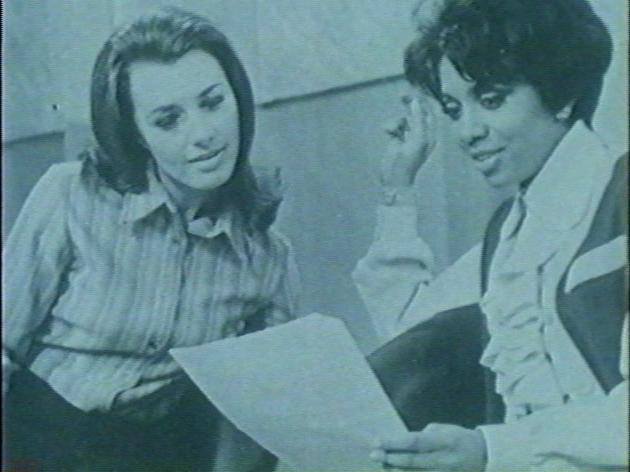
On July 30, 1968, she made her debut as a reporter on Thames Television’s Today programme, becoming the first Black woman to appear as an on-camera television reporter in Britain. The following day, her achievement was highlighted in The Times newspaper, marking a historic moment in British broadcasting.
Reporting on community stories and current affairs, Blake-Hannah quickly became a visible symbol of progress. At a time when Black people were largely absent from serious news programming, her presence on screen challenged long-standing assumptions about who could tell Britain’s stories.
In addition to Thames TV, she worked with the BBC, ATV-Birmingham, and Channel 4-TV.
Facing Racism on and off the Screen
Despite her success, Blake-Hannah’s groundbreaking role came at a cost.
Her contract with Thames Television ended after just nine months. She later learned that television executives had received complaints from viewers who objected to seeing a Black woman reporting the news.
Rather than allowing the setback to end her career, she continued working in television, joining ATV in Birmingham. However, racism remained a constant reality, both in the workplace and in everyday life. After spending eight years in Britain, she eventually decided to return home to Jamaica.
Reflecting on the experience decades later, Blake-Hannah described racism as a harsh awakening, but one that never diminished her determination to succeed.
Continuing to Break New Ground
Back in Jamaica, Blake-Hannah built a remarkable career that extended far beyond journalism.
She continued to build an influential career in Jamaica, working behind the scenes in film and television, founding the Reggae Film Festival, and championing Jamaican arts and culture. She also interviewed politicians, entertainers and other notable figures while establishing herself as a respected author. In 1982, she published Rastafari: The New Creation, one of the earliest books to explore the Rastafari movement in depth. She later wrote Joseph: A Rasta Reggae Fable, inspired by the life and message of Bob Marley, further cementing her role as a storyteller, cultural advocate and chronicler of Jamaican identity.
In 1984, Blake-Hannah broke new ground once again when she became Jamaica’s first Rastafarian Senator. Serving as an Independent Senator from 1984 to 1987, she brought a previously underrepresented perspective into the nation’s Parliament and helped broaden public understanding of Rastafari within Jamaican society.
Her contributions to journalism, literature, culture and public life have earned her numerous honours. Among them are the Ethiopian Gold Adowa Medal for services to the Ethiopian Orthodox Church, awarded by the Ethiopian Crown Council of Jamaica, Jamaica’s Order of Distinction for outstanding contributions to journalism, film and literature, and the prestigious Silver Musgrave Medal for Literature, awarded in 2024 in recognition of her significant contributions to Jamaican letters and cultural life.
International Recognition and Advocacy
Beyond her work in media, literature and public service, Blake-Hannah also gained recognition as an educator, lecturer and cultural ambassador. She has delivered lectures at the University of the West Indies, the University of Vienna in Austria, New York University, Florida International University, the University of Guyana, the University of the Virgin Islands and the World Archaeological Congress Pre-Conference in Curaçao.
Her advocacy extended to the international stage in 2001 when she served as a delegate to the United Nations World Conference Against Racism in Durban, South Africa. Through her lectures, writing and public engagement, Blake-Hannah has helped promote greater understanding of Jamaican culture, Rastafari, identity and social justice issues around the world.
A Legacy of Firsts
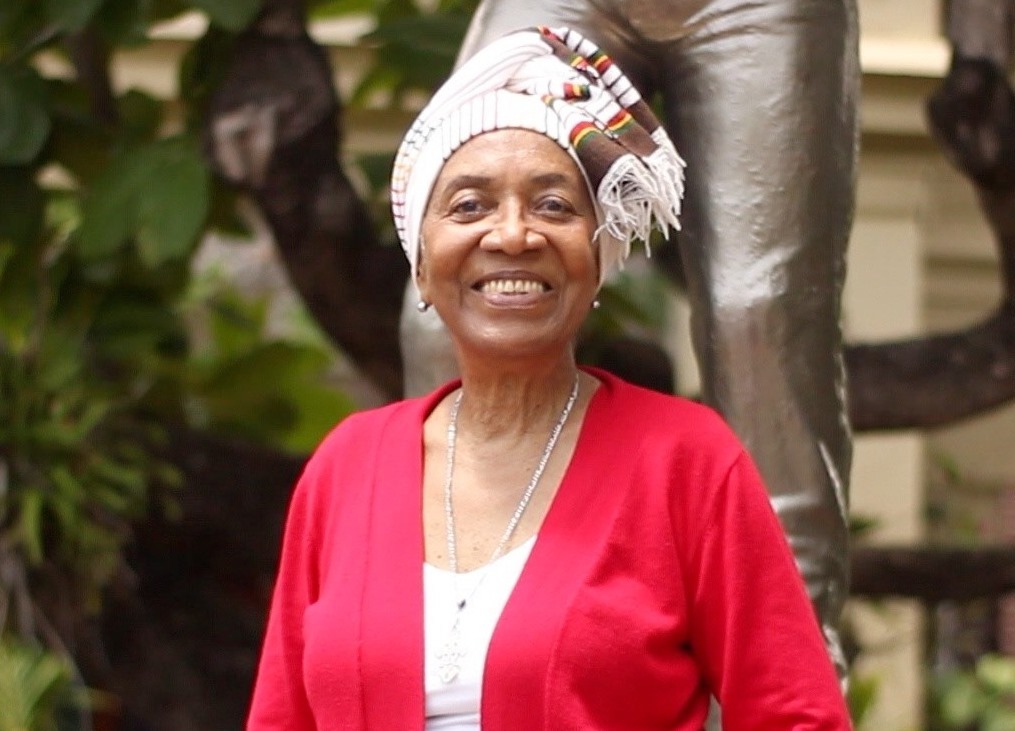
Today, Barbara Blake-Hannah is remembered not only as Britain’s first Black female television reporter, but also as a pioneering Jamaican who repeatedly broke barriers throughout her life.
From challenging racial boundaries in British broadcasting to becoming Jamaica’s first Rastafarian Senator, her career has been defined by courage, resilience and a willingness to step where few had gone before. Her story remains an enduring reminder of the impact Jamaicans have made on the global stage.
Readers interested in learning more about Barbara Blake-Hannah’s work can explore her books here and follow her on social media here to keep up with her latest projects, reflections and cultural advocacy.
Did You Know?
Barbara Blake-Hannah’s 2024 Silver Musgrave Medal for Literature marked a unique milestone for her family. According to Blake-Hannah, her father, Evan Blake, received a Silver Musgrave Medal for Journalism in 1978, while her son, Makonnen, was awarded the first-ever Youth Musgrave Medal for Information Technology in 2001. Her award made her the third member of the family to receive a Musgrave Medal and, as she proudly notes, the first Rastafarians to be so honoured.
Syndicated from Jamaicans.com · originally published .
Legal context · powered by Jurifi
Get the legal angle on this story. Pick a prompt and Jurifi's AI will explain it using Jamaican law.
AI replies are based on Jamaican law via Jurifi. Not legal advice.
Other coverage

I will never sleep good again’ Mother grieves slain son in US gun attack
Jamaica Star (Video)Watch
45-y-o mom battling rare cancer not giving up
Jamaica Star
‘Something We Said’: When words hurt, is a father’s love the balm?
Caribbean Life
BOOST scholar sparks a love of mathematics
Jamaica Gleaner
Twin sister obsessed with my fiancé
Jamaica Star