
4,000 child-related incidents and counting…
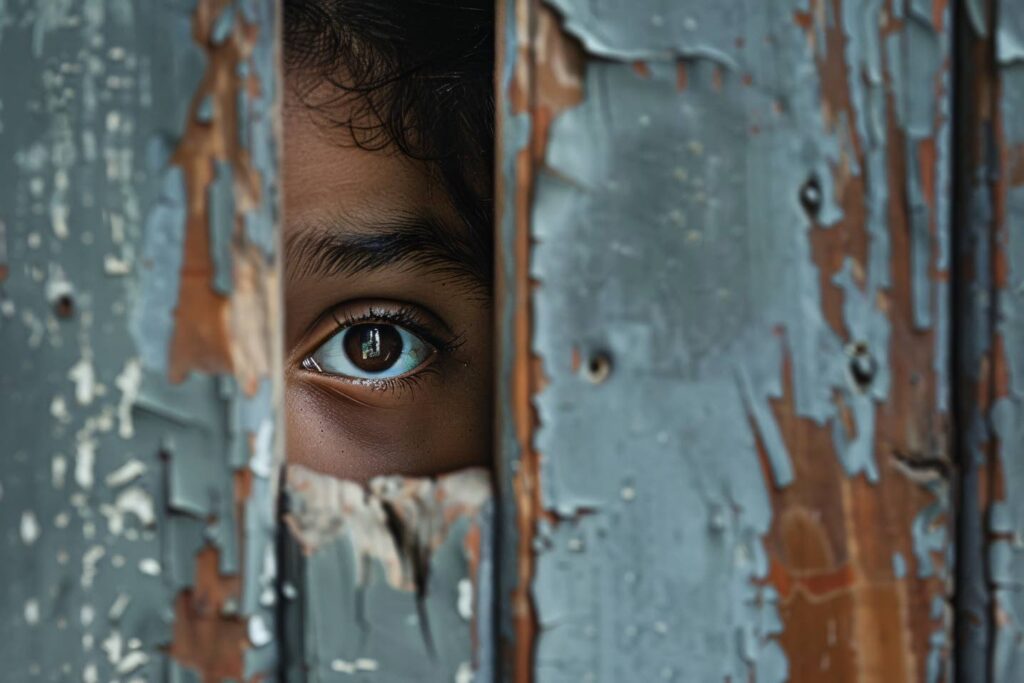
THE first three months of 2026 saw Jamaican children falling victim to more than 4,000 incidents of child abuse, child trafficking, child labour, and neglect, as well as struggling with behavioural challenges and bullying.
Child advocates Nigel Cooper, who is the director of Hear the Children Cry (HTCC), and Afrika Stevens, executive director and founder of Fi We Children Foundation, labelled the statistics alarming. In recognition of Child Month, being commemorated under the theme ‘Prioritising Our Children’s Mental Health: Strong Minds Safer Future’, Stevens stressed that there is need for more urgent, coordinated action and a multifaceted approach on the dangers and deficits affecting Jamaica’s children and their future.
HTCC called for its proposed ‘10 Year Disrupt Poor Parenting Practice Project’ to be funded by the Government, and the establishment of a Ministry of Family and Parenting to tackle behaviour issues.
According to data from the National Children’s Registry, a branch under the Child Protection and Family Services Agency (CPFSA), of the 4,020 incidents reported between January 1 and March 26 of this year, behavioural issues among children, such as incidents of children running away from home, being beyond control, using substances in all forms, and truancy, topped the charts with 1,733 incidents.
Parental neglect in all forms, including lack of supervision and medical attention, unmet basic needs, abandonment, and lack of educational needs, has the second-highest number of incidents so far this year, with 1,640. Meanwhile, there were 1,557 incidents of children who are otherwise in need of care and protection because they have an unfit parent, are living in a household with an offender, witnessed a crime or act of abuse, are suicidal, living on the streets, or have parents with financial challenges.
Additionally, a total of 974 incidents of physical abuse were reported during the same three-month period, followed by 904 incidents of sexual abuse. Emotional abuse accounted for 474 of the incidents reported to the agency. There were also 104 incidents of child labour, 49 incidents of bullying, and nine incidents of child trafficking.
A breakdown of the data shows that most of the more than 4,000 incidents were reported in Kingston and St Andrew, followed by St Catherine and then St Ann. The parishes had 863 incidents, 608 incidents, and 432 incidents, respectively. Hanover had 100 incidents reported, the least among all 14 parishes.
Stevens said the more than 4,000 incidents affecting children in the first quarter is deeply concerning.
“At Fi We Children Foundation we continue to witness how systemic gaps, such as under-resourced child protection services and limited access to psychosocial support, leave far too many children vulnerable. These figures must do more than alarm us; they must drive urgent, coordinated action. This includes strengthening prevention frameworks, increasing investment in early intervention, and expanding community-based support systems that empower families before situations escalate into abuse or neglect,” she told the Jamaica Observer.
Behavioural incidents among youth are on the rise. A total of 506 incidents were reported in January, and incidents climbed to 550 in February. March had 677 incidents of children displaying behavioural issues. However, incidents of bullying have fluctuated since the start of the year. The data reveals that 22 incidents were reported in January, 11 in February, and 16 in March.
Cooper noted that apart from the addition of deans of discipline positions for schools, the administrative structure in schools has remained largely unchanged for the past 30 years. In a press release addressing behavioural challenges among youth, he called for resources to strengthen school administration nationally.
“This would include increasing the number of schools with a dean of discipline and ensuring that guidance counsellors operate with a one-to-500 student ratio, which is generally not the case in many schools. In the short term, providing funding to NGOs like PALS to provide more peace ambassadors in schools should be supported by both the private sector and the Government,” he reasoned.
Priscilla Duhaney, senior attorney at law and HTCC spokesperson, added that more security reinforcement and surveillance on the school campus is needed to monitor maladaptive behaviours.
“Many of the children are participating in drugs, smoking, and other illicit behaviours that are affecting their mental health. This is manifested in behavioural changes and uncontrollable behaviour,” said Duhaney in the release.
“I also believe the curricula should be modified to include mediation techniques and [instruction on how to] develop better communication skills. Mediation and restorative justice should be implemented in the schools before matters escalate to a physical exchange,” she added.
Cooper further stressed the need for the implementation of HTCC’s 10-year plan to disrupt poor parenting, and the formation of a ministry dedicated to family planning and parenting, noting that the family needs a voice in the country’s weekly Cabinet meeting.
“Due to the scale of the social intervention needed, we are suggesting that the Government use the existing infrastructure of the Social Development Commission (SDC) and the National Parenting Commission, in collaboration with NGOs and service clubs,” said Cooper.
He further called for research on the relationship between child trafficking and missing children to be conducted, and is seeking support from our local universities, the private sector, and the Government to get such a study completed.
Child trafficking, which involves the use of children for the purpose of exploitation in various ways, also saw a fluctuation in reports over the last three months. There were an overall nine incidents in the first quarter of this year, five incidents reported in January, and one incident in February. An additional three incidents were reported in March.
Additionally, there were 69 incidents of child trafficking recorded in 2024 and 36 incidents in 2025.
The CPFSA reported 1,027 children missing between January and December 2023. Of that number, 151 children — 133 girls and 18 boys — were still missing at the start of 2024. That’s nearly 15 per cent of those cases unresolved. In 2024 some 1,011 children were reported missing, according to the CPFSA. Of this number, 898 returned home, six were found dead, and 107 remained missing. The majority of missing children are girls.
Cooper shared that HTCC has tracked missing children for 15 years and has counselled with more than 5,000 families of missing children. He stressed that “it cannot be that we consistently cannot find the 80 plus children annually who do not come home. We need answers.”
Nigel Cooper, director at Hear the Children’s Cry
STEVENS…these figures must do more than alarm us
Syndicated from Jamaica Observer · originally published .
Legal context · powered by Jurifi
Get the legal angle on this story. Pick a prompt and Jurifi's AI will explain it using Jamaican law.
AI replies are based on Jamaican law via Jurifi. Not legal advice.
Other coverage
Call to Protect and Empower Jamaica’s Children
CVM TV
Jamaicans Reminded of Their Shared Responsibility to Protect, Guide and Nurture The Children
Jamaica Information Service
Child Month Kicks Off With Prayer and Praise
Ministry of Education and YouthRuthlyn James | When healing environments harm - Rethinking hospital care for neurodivergent children
Jamaica Gleaner
Parents Urged to Foster Good Reading Habits At Home
Jamaica Information Service