
Ambassador Wang Jinfeng | The Global Governance Initiative: A new pathway for International Seabed Governance

In September 2025, Chinese President Xi Jinping formally proposed the Global Governance Initiative (GGI), calling on countries to work in concert for a more just and equitable global governance system.
This major initiative responds to the shared aspiration of all countries to improve global governance. Upon its introduction, the GGI swiftly gained support from nearly 160 countries and international organisations, with over 60 countries joining the Group of Friends of the Global Governance. United Nations Secretary-General António Guterres welcomed the initiative at the earliest opportunity, commending its firm grounding in multilateralism and underscoring the importance of safeguarding the international system with the U.N. at its core and the international order underpinned by international law.
The oceans have nurtured civilisations, connected the world, and continue to anchor humanity’s shared future. The Area (the international seabed area beyond national jurisdiction) and its resources are the common heritage of mankind. The International Seabed Authority (ISA), as the organisation responsible for activities in the Area and the administration of its resources, must have its authority upheld and its effectiveness further enhanced.
Today, the world has entered a new period of turbulence and transformation. Unilateralism is on the rise, multilateralism is under strain, and the global governance deficit continues to widen. As unilateral approaches extend to deep-sea areas and negotiations on the draft Exploitation Regulations remain deadlocked, the ISA faces the real risk of being marginalised and of its authority being eroded. Against this backdrop, the GGI offers a new pathway for international seabed governance.
Sovereign equality is the foremost principle of international seabed governance
Currently, the authority and rule-making processes of international seabed governance are facing unprecedented challenges. Certain States and entities are openly bypassing the ISA and unilaterally pursuing deep-sea mining activities. As United Nations Secretary-General António Guterres has stated, “the deep sea cannot become the Wild West.” If some major powers not party to the United Nations Convention on the Law of the Sea (UNCLOS) are allowed to unilaterally erode the common heritage of humankind, the international seabed regime risks reverting to a law of the jungle. International seabed governance should adhere to the principle of sovereign equality, under which all States participate on an equal footing, take part in decision-making on an equal basis, and share benefits equitably.

The international rule of law is the cornerstone of international seabed governance
All parties should faithfully fulfil their rights and obligations under UNCLOS and its 1994 Implementing Agreement. Any attempt to bypass the ISA and the international legal framework and to seize international seabed resources without authorisation lacks legal validity and will not gain broad support. China has consistently been a staunch defender and contributor to the international rule of law in ocean affairs. China was among the first countries to sign and ratify UNCLOS, and has taken concrete actions to safeguard its authority and integrity. China actively participated throughout the negotiations on the BBNJ Agreement, was among the first countries to sign and ratify the Agreement, and has applied to host BBNJ Secretariat in Xiamen, China, thereby contributing to global ocean governance.
Multilateralism is the fundamental approach to international seabed governance
International affairs should be addressed through consultation among all parties, and the future and destiny of the world should be in the hands of all countries. On the one hand, efforts should be made to firmly safeguard the authority and effectiveness of the ISA, support its reform and improvement, enhance its operational efficiency, and enable it to better play its central coordinating role. On the other hand, firm opposition should be made to bloc politics and camp-based confrontation, as well as to the politicisation and instrumentalisation of deep-sea issues, so as to ensure that the ISA serves as a multilateral platform for building consensus and bridging differences.
A people-centred approach is the value orientation of international seabed governance
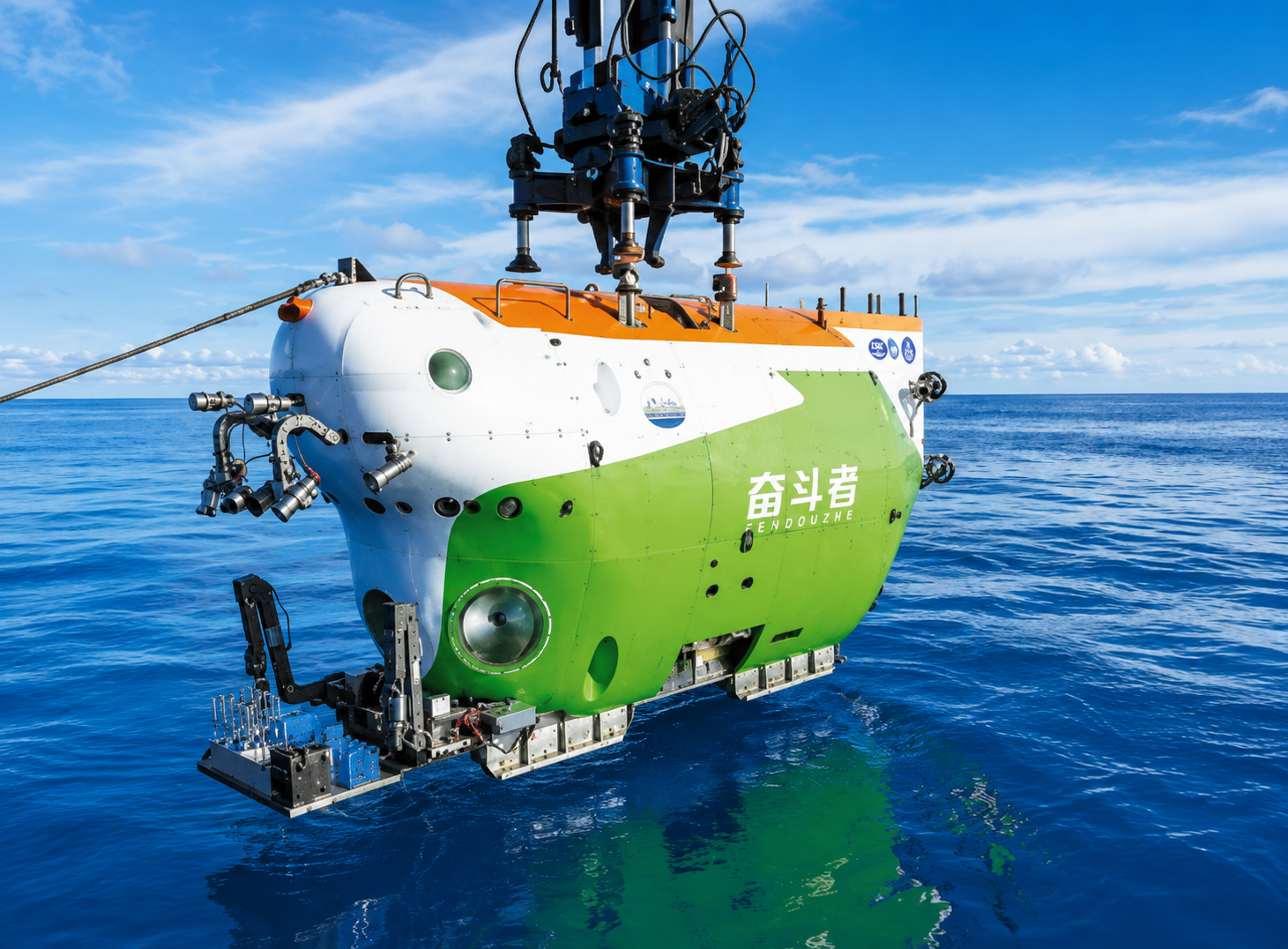
The people of all countries are both the fundamental participants in and beneficiaries of international seabed governance. In 2025, at the Third United Nations Ocean Conference, China announced the launch of 100 bilateral and multilateral cooperation projects and the offer of 5000 training opportunities, in support of small island developing States and others in implementing the Sustainable Development Goals. In April 2026, China announced its decision to open ten major national scientific research infrastructures to all countries, including the Fendouzhe (Striver) deep-sea manned submersible capable of operating at depths of 10,000 meters. By doing so, China is transforming its independently developed deep-sea technologies into global public goods, enabling researchers worldwide to access the “no-man’s zone” of the deep ocean, and promoting research in frontier fields such as hadal ecology, the origin of life, global climate change, and seabed resource development, while advancing international cooperation in deep-sea technology and talent development, thereby delivering tangible benefits to people around the world.
Taking real actions is a key component of international seabed governance
China attaches great importance to marine environmental protection and upholds the principle of “development with protection”. It advocates better addressing environmental concerns through well-balanced exploitation regulations and continuously advancing deep-sea technologies. In March 2026, the World Register of Marine Species (WoRMS) released its list of the world’s top 10 newly discovered marine species in 2025. The “sponge ambush worm” (Eunice siphoninsidiator), discovered by Chinese scientists during seabed exploration activities in the northwestern Pacific, was included in the list. This serves as a vivid illustration of how responsible and sustainable ocean activities can advance scientific understanding of the deep sea and strengthen marine environmental protection.
International seabed governance is not only a frontier of resource development, but also a reflection of the broader process of democratisation and strengthening the rule of law in international relations. Applying the GGI to international seabed governance will bring a profound transformation—from resource competition to rules-based co-governance, from dominance by a few to participation by all, and from short-term interests to intergenerational responsibility. This concerns not only the future of 250 million square kilometres of seabed, accounting for 49% of the Earth’s surface, but also whether the reform of the global governance system can, amid profound changes unseen in a century, stay anchored to the right direction and follow a pragmatic path. It is a question of whether the world moves toward fairness and justice, or slides into fragmentation and confrontation.
This year marks the 30th anniversary of China’s accession to UNCLOS and its 30th anniversary as a member of the ISA. China stands ready to work with all parties to advance the effective implementation of the GGI, explore ways to reform and improve international seabed governance. Together, we will strive to develop a just, equitable, and sustainable international seabed governance system and build a community with a shared future for mankind.
Ambassador Wang Jinfeng is the Permanent Representative of China to the International Seabed Authority
Syndicated from Our Today · originally published .
Legal context · powered by Jurifi
Get the legal angle on this story. Pick a prompt and Jurifi's AI will explain it using Jamaican law.
AI replies are based on Jamaican law via Jurifi. Not legal advice.
Other coverage
China’s Xi Jinping launches new AI alliance: What is it?
Jamaica Inquirer
China’s Xi says AI ‘should not be a solo performance by a single country’
Jamaica Inquirer
Jamaica chases history in US draught championship
Jamaica Observer
Samuda calls for accelerated global action on water, energy and sustainability at UN forum
Jamaica Observer
Nand C Bardouille | Guyana's candidate for top UN post receives backing of Caribbean leaders
Jamaica Gleaner