
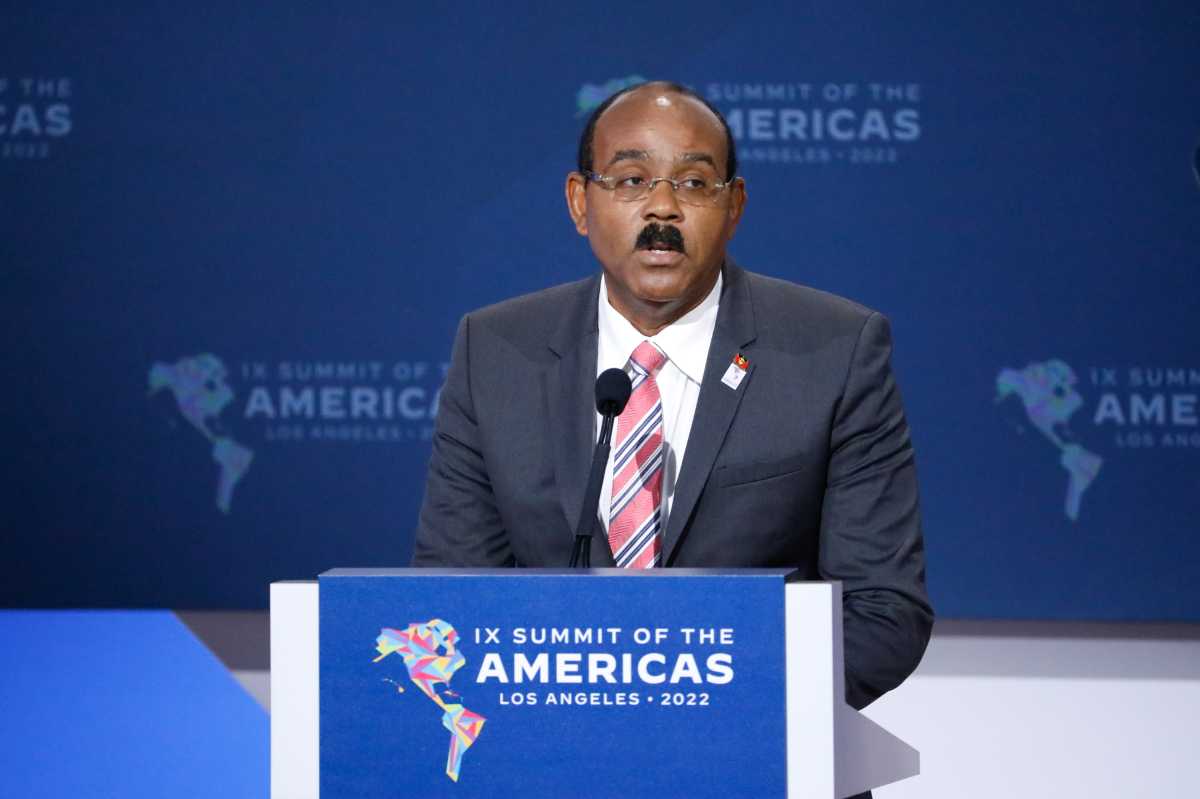
Antigua and Barbuda presses US over deportee limits and safeguards
Antiguan officials say negotiations with the United States are continuing over how many deportees the twin-island state should receive, with Prime Minister Gaston Browne saying the disagreement has held up the start of the programme.
According to Browne, Antigua and Barbuda’s position is that the figure should not exceed 10 people in a year. Washington, however, appears to be pushing for a quota of 10 each month, a gap he described as significant.
Speaking during his weekly radio programme at the weekend, the recently re-elected prime minister said the federation could not absorb large numbers of people removed from the US without creating security concerns and exposing the government to heavy public criticism.
“At one point I was told that they had asked us to accept as many as 120 individuals and there was no guaranteed assistance, no guaranteed due diligence. And I said to them that that is totally unacceptable,” Browne said. “I mean, can anybody justify the prime minister of this country being part of any decision, or agreeing, or being compliant with anything that is not in the best interest of this country?”
His comments came about a week after St. Kitts and Nevis said it had taken in its first group of Caribbean-origin deportees under the third-country deportation arrangement that the US has been urging CARICOM governments to accept. Dominica, Grenada and Guyana have also been identified among the possible receiving states.
The United States has said the persons involved will not be criminal deportees, but individuals being removed for matters such as overstaying visas and non-felony offences.
Browne, like other regional leaders, is insisting that proper background checks be done before any arrivals. He is also asking for funding to help care for the deportees after they enter Antigua and Barbuda.
“We’re small, powerless and very vulnerable,” Browne said. “Based on that vulnerability, we have to make sure that we keep our country safe and secure. Where there is any probability for us to even inadvertently and complicity allow criminals to come into the country, as I said, that’s not in my leadership. One criminal element coming into our country can make a difference. We also said to them, too, that these persons must have travel documents because what happens sometimes is some of these immigrants who they detain as soon as they get to the US tear up the travel documents and we can’t have them come here as stateless individuals.”
Syndicated from Caribbean Life · originally published .
Legal context · powered by Jurifi
Get the legal angle on this story. Pick a prompt and Jurifi's AI will explain it using Jamaican law.
AI replies are based on Jamaican law via Jurifi. Not legal advice.
Other coverage

PM says some of donated hurricane funds will go to the JDF, ODPEM
Jamaica Gleaner
Buyers urged to be strategic as Jamaica real estate boom continues
Cnweekly
Preparing for the unknown
Jamaica Observer
ODPEM, JDF to be restocked with hurricane donation
Jamaica Gleaner
Three men deported by US file legal case against Eswatini over detention
The Guardian (Jamaica)