
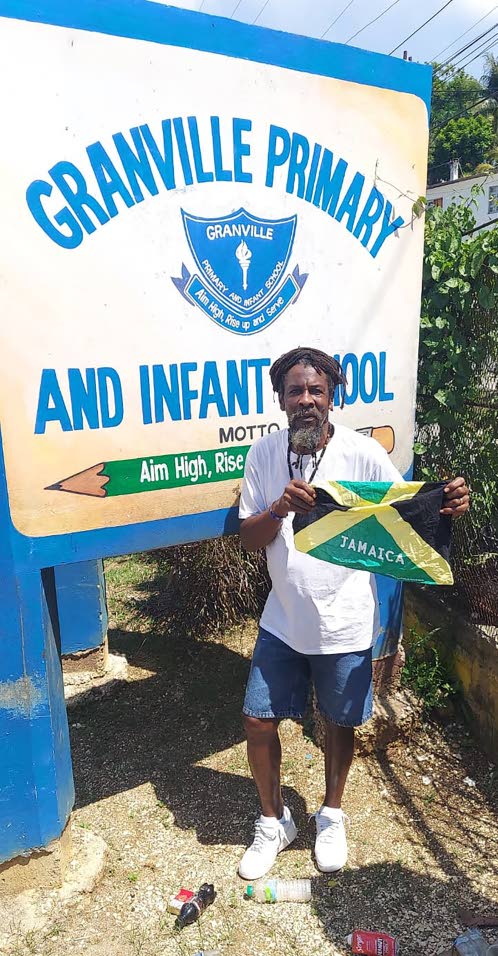
Canada-based Ron Cunningham, community development activist and former resident of Granville, St James, looks on the challenges facing the troubled community and sees the possibilities for the way ahead. Here is an abbreviated version of his piece written for the Jamaica Observer:
A recent feature in the Jamaica Observer titled “From Violence to Vision: Granville” has brought renewed attention to the community. And as if to demonstrate the timeliness of the article up came the controversial police killing of a woman resident that sent Granville into uproar.
While the article’s focus on present challenges is important, it must be balanced with a clear understanding of what Granville has always been — and what it can yet become.
Established around 1848 after Emancipation, Granville emerged on the outskirts of Montego Bay as a community built, not through missionary intervention or external design, but through the deliberate efforts of freed men and women determined to shape their own future. Unlike many so-called free villages that relied on church or colonial support, the people of Granville took a more direct and independent path — engaging with landowners to negotiate the purchase of marginal lands on the fringes of estates such as Bellefield, securing ownership on their own terms and transforming those spaces into viable homes and farms. This was self-organisation, self-reliance, and vision in action.
That history is not symbolic — it is foundational. It speaks to a community that has always had the capacity to organise, adapt, and move forward. That same strength continues to live within its people today.
Long recognised for its cultural vibrancy and sporting excellence, Granville reflects a deep tradition of expression and achievement. Cultural practices such as Jonkonnu continue to carry identity and history, while cricket and football provide pathways for discipline, growth, and aspiration.
From modest beginnings, individuals from communities like Granville have gone on to represent Jamaica at national and international levels — reinforcing a strong and enduring sense of identity rooted in resilience and pride.
Yet potential alone is not enough. Like many communities that have grown without coordinated planning, Granville now faces structural challenges — infrastructure gaps, unaligned land use, and limited long-term development. This is not a failure of the community, but growth without alignment.
Former resident of Granville, St James, and community development activist, Ron Cunningham urges the iconic community to rise again.
The call now is to move from reaction to vision.
The Greater Granville Initiative reflects that shift— toward coordinated, sustainable development grounded in a clear, disciplined framework. At its core is the need for a structured master plan that integrates land use, infrastructure, housing, and economic opportunity.
Central to this vision is connectivity. The core of Granville must be intentionally integrated into a broader development plan, ensuring stronger, more efficient links with surrounding communities, such as Pitfour, Bogue Village, and the wider Montego Bay region. Connectivity is not simply about roads — it is about access, opportunity, and inclusion within the wider economic and social landscape.
Housing must be addressed with purpose — balancing affordability with dignity, supporting land regularisation, and creating pathways to stable ownership. With its proximity to Montego Bay, Granville is also well-positioned to support entrepreneurship and local economic growth.
Community leadership remains strong, and recent gains — particularly in reducing violence — must be sustained. Continued investment in youth, education, and community-building will be essential, alongside a commitment to sustainability and long-term planning.
Ultimately, this moment calls for collective action. Community members, the Diaspora, private investors, government agencies, and development partners all play a role. This is an opportunity to reconnect, reinvest, and realign efforts in a way that honours Granville’s history while shaping its future.
Granville has already shown what is possible when people act with purpose. The question now is whether we are prepared to match that legacy with vision, coordination, and commitment.
If we do, Granville will not simply respond — it will rise once again.
Syndicated from Jamaica Observer · originally published .
Legal context · powered by Jurifi
Get the legal angle on this story. Pick a prompt and Jurifi's AI will explain it using Jamaican law.
AI replies are based on Jamaican law via Jurifi. Not legal advice.
Other coverage

Ambraee Houslin | Jamaica’s next growth story must be built outside Kingston
Our Today
News Feature CRP -Transparent governance and sound financial stewardship critical to community development
Planning Institute of Jamaica
Dr. Maria Myers-Hamilton | Building Futures, One Schoolroom at a Time
Our Today
Peter Bunting | Jamaica’s productivity today is below where it was 25 years ago
Our Today
Francis Wade | Why We Can't Afford to "Peanut Butter" a Vision 2050 Jamaica
Jamaica Gleaner