
Chilling threat
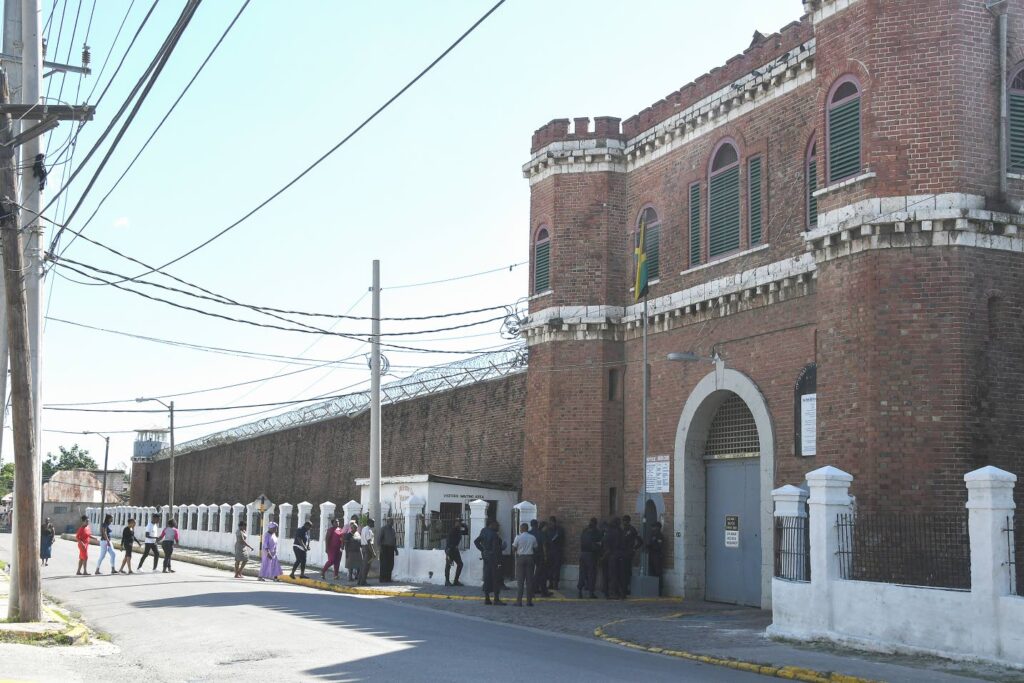
Long before Andria Whyte Walters became a practising attorney she was passionate about prison reform, but the jarring experience of having an inmate call her threatening that even though he was behind bars he could “get to” her has set the experienced advocate on the warpath to see Jamaica’s correctional facilities serve their intended purpose.
“The person did that because he was being unruly in court and I reprimanded him in open court. This is somebody that is literally not in a police lock-up but in a prison, and he used his phone from inside the prison to call me, and he wasn’t shy about it,” Whyte Walters said in a recent interview with the Jamaica Observer, adding that she was shaken by the experience.
“The prisons are so old, they’re not suited to curtailing prisoners ‘reaching out’. We have to decide the kind of correctional institutions we want. Do we want one that is just reactive and just like an assembly line, so they come in, some come out, and then another set comes in, or is it that we are saying, listen, we need to get a fit-for-purpose correctional institution?” Whyte Walters argued.
She said while Jamaica is basking in the afterglow of the achievement of historic crime reductions, with major crimes falling by 20.2 per cent and murders dropping by 22.5 per cent so far this year, prison reform must be a key tenet of any crime-fighting or crime-reduction strategy.
“Yes, you lock them up now, and the investigation skills of the police have increased — they have gotten so much better — but even if you put them all in prison, at some point they are going to come out, or they will continue their lives of crime behind bars using technology,” the defence attorney argued.
The increasing use of telecommunication devices by inmates to maintain contact with criminal networks influencing gangs and ordering killings was the impetus behind the passage of legislation to facilitate tighter control of prohibited articles in 2021. The Corrections (Amendment) Act 2021 amended the Corrections Act of 1985, as well as the Correctional Institution (Adult Correctional Centre) Rules, 1991 and introduced several new offences. Under the legislation, which not only imposed heavier fines, but provides for prison time for officers in breach, offenders convicted in the parish courts can be fined up to $3 million or be imprisoned for three years. A second or subsequent offence will attract a fine of $5 million or up to five years’ imprisonment.
The attorney, however, believes that those provisions need further buttressing.
“It makes no sense you are putting in jammers, and you’re paying money when the physical structures are the problem,” she argued.
Noting that plans for the construction of a new maximum security facility for Jamaica have long been talked about, Whyte Walters is contending that the National Reconstruction and Resilience Authority (NaRRA) could be the vehicle to bring it to fruition.
“I believe that NaRRA is a unique opportunity that we may not get again for a long, long time. It should be the exception, and not the norm, for men to reach out of the walls of prison and plot murders, and can get away with it. So, locking them up is neither here nor there if they can do the same thing from the inside that they can do outside,” Whyte Walters said.
She maintained that “prison reform” has been treated like “the stepchild of the justice system and national security”, and insisted that her comments should not be construed as criticism but rather a quest for solutions.
“We know the four tenets of sentencing — retribution, deterrence, rehabilitation, and incapacitation — now, it’s not like the powers that be don’t know this, but I believe that there is, inherent in the Jamaican culture, the view that ‘dem fi suffer’, but there’s a difference between punishment and torture. All I am saying is, when you’re doing prison reform the mindset should be, we need a space that family members can come and interact,” Whyte Walters said.
“We also need a space where there is no way an inmate can call one of his cronies on the road and say, ‘Listen, go wet up da bwoy deh,’ under no circumstances. And if it is that that person is caught, that person is punished to the full extent of the law, because what it does is it continues to undermine the integrity of our national security. And I know that they have tried, but unless there is a physical space, until and unless they have a building, a maximum security prison that will take care of the using of technology to harm people from inside the prison, then we’re just going to continue like this,” Whyte Walters stated further.
Another defence attorney, Sanjay Smith, while noting that he has never had the experience of being contacted via phone by any prisoner, said the calls for a new prison facility are not unfounded.
“If we are to really look at the condition of some of these prisons, they are not big enough to properly house the number of persons, partly because there are some persons who are at prisons but are not convicted. It’s really a matter of there’s no space in some of the jails, because jail and prison are not the same,” Smith pointed out.
“So the jails are at the police stations, and the prisons are the prisons, and even how one can access the prisons, as opposed to jail, it is very, very different… So we need to perhaps explore and find a place where we can build maybe even a facility that will act as a bigger jail for persons who have not been convicted, but lock-ups are not big enough. You find a lot are actually at capacity and unable to properly house some of the persons, which is very unfortunate. It poses a health risk,” he told the Observer.
Smith, the son of late attorney and lawmaker Ernest “Ernie” Smith, said personal experiences within the penal system have impacted his own psyche.
“From a health perspective and a humanity perspective, it needs to be addressed. When you hear persons say that prison is not a bed a roses, it’s a serious thing. I have visited clients across different prisons, and I can tell you, the first thing that you will remember is the smell. I spoke to a senior attorney many years ago, and even my father as well, when he was alive and practising; after you come from certain prisons, to see a client, you go home, you put the clothes at the door, and you have a long shower, because sometimes the smell is so strong, it’s almost like it stains your clothes,” he told the Observer.
For those serving time or awaiting judgment while suffering from various health conditions, Smith said the reality is grim.
“They (lock-ups) are cleaned, but remember that some of these places are actually so full… I had a client who was six foot, five [inches] and he was too tall and too fat to fit comfortably in the holding area of the jail. He was too big, his head was almost touching the top. And we also have to bear in mind that there are persons who are in these situations who have serious medical conditions, and the question then becomes, how effectively the prison system or the lock-up [can] facilitate persons who are disabled or have serious medical complications,” the attorney shared.
Jamaica’s present penal facilities, Smith said, are far from adequate for individuals with limited mobility.
“There are several [inmates who are paralysed]. I have a client who is paralysed right now, his trial is coming up. Of course, he will be granted bail on humanitarian grounds, because it’s difficult for them to properly take care of somebody who, for example, needs diapers. The requirement for these particular persons is beyond the average. Simple things, like walking to the bathroom to use the toilet, some of these persons can’t, and the issue now with bedsores when somebody is paralysed, that comes up as well, because there have been cases I’ve seen, or been involved in, where persons are seriously injured, and they can’t come to court because they have been rushed to the hospital because they have bedsores and they have burst and it’s causing a problem and infection and all that stuff,” Smith explained.
According to the attorney, even current legal provisions have added to the litany of prison-related woes, presenting all the more need for urgent reform.
He pointed to the Firearms Act 2022, under which anyone convicted of illegal possession of a firearm or prohibited weapon faces a mandatory minimum sentence of 15 years before eligibility for parole, arguing that it needs to be amended “because there are situations where persons are sent to prison, but because of their particular physical condition they require special care and the State is responsible for them in custody”.
“Imagine trying to care for someone for 15 years who is paralysed?” Smith contended.
In 2022, the present Jamaica Labour Party Administration announced that lands have been identified for the construction of a new state-of-the-art correctional facility. That new structure was expected to cost at least $8 billion. National Security Minister Dr Horace Chang, at the time, said construction of a section of the new facility to house high-security inmates would start in the 2022/23 fiscal year.
“We have examined what is required and have the [Jamaica Defence Force] engineering [division] doing the design work,” he told a meeting of the Standing Finance Committee of the House of Representatives.
Syndicated from Jamaica Observer · originally published .
Legal context · powered by Jurifi
Get the legal angle on this story. Pick a prompt and Jurifi's AI will explain it using Jamaican law.
AI replies are based on Jamaican law via Jurifi. Not legal advice.
Other coverage

‘The lady didn’t deserve this’ - Senior cop says police forced to make ‘quick decisions’ as Granville continues to reel after police shooting
Jamaica Gleaner
Deep in the Mountains of St. Thomas… A Forgotten Community
Elite Jamaica (Video)Watch
NO REAL ADVANTAGE - Mt Pleasant, MoBay wary of trailing JPL semi-finalists Cavalier, Portmore confident of evening things up
Jamaica Gleaner
POST MATCH PRESS CONFERENCE: REGGAE GIRLZ DEFEATS GUYANA (2-0)
Jff YtWatch
The 1804 Map Called It a Pond… But What I Found Was Different
Elite Jamaica (Video)Watch