
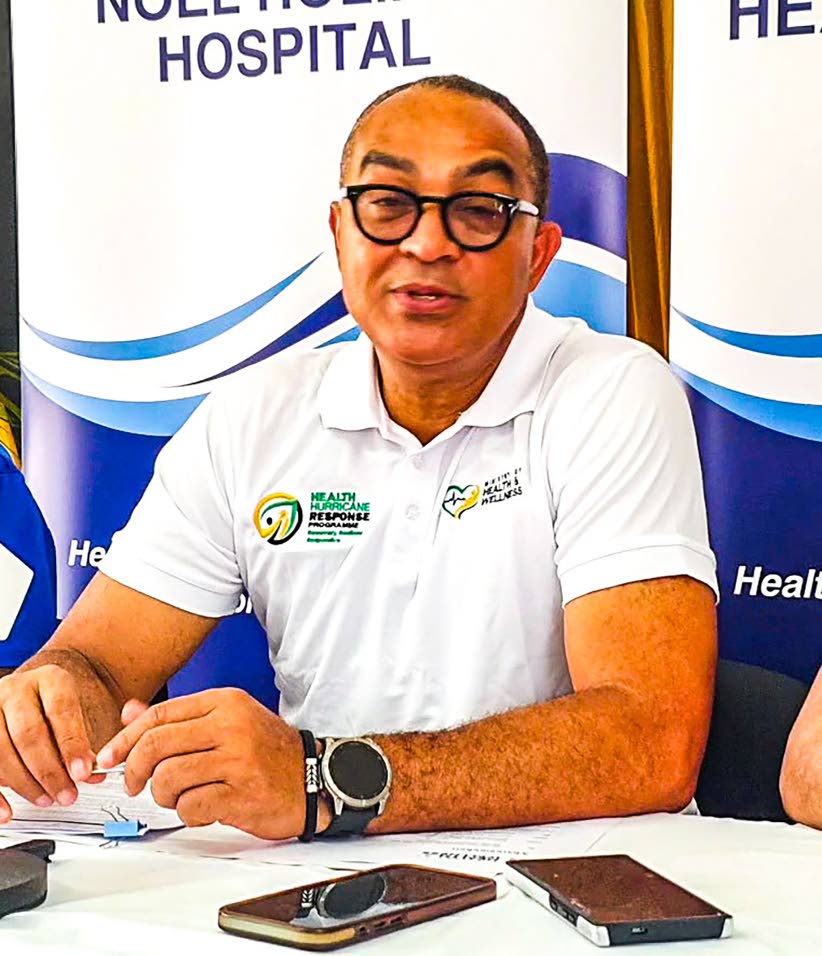
WITH hundreds of medically discharged patients continuing to occupy public hospital beds across Jamaica, Health Minister Dr Christopher Tufton says the Government is looking at the law to determine how relatives who abandon loved ones in hospital can be held accountable.
He also revealed that some relatives continue to live in homes owned by the very people they have neglected.
Speaking with the Jamaica Observer after last Thursday’s Health Hurricane Response Programme (HHRP) working breakfast, Tufton said social cases currently account for between five and 10 per cent of the country’s roughly 4,000 public hospital beds.
He said the problem has become particularly acute in western Jamaica, where he believes the aftermath of Hurricane Melissa may have worsened an already strained situation.
He warned that the growing number of patients who no longer require medical treatment but remain in hospital is reducing bed availability for people awaiting admission.
“We’re doing another census, because it’s a moving target, and I’ve asked for that information to be granted, but we are really under pressure when it comes to social cases. Like I said at Savanna-la-Mar Hospital [last] week, I checked, there were 26. Now, when you have a hospital with 150, 160 beds and you have 26 [social cases], and you have 30, 40 people waiting for a bed, you understand that problem would have been much less,” Tufton said.
However, the minister said the challenge extends well beyond Savanna-la-Mar Public General Hospital.
“The truth is that the infirmaries seem to be crowded… [and] what is happening is that there’s a gradual creep that is taking place, where health now is becoming a provider of social [services] for the infirm. We’re already doing it unofficially, but practically, yes, in the hospitals; because I think we have, in western region alone — and this could be wrong — in western region alone, maybe because of Melissa, I think we have in excess of 100 social cases.
“And when you contact the families, they say they’re not willing to take the person because they can’t manage them and all of that, while some of them don’t even respond,” he said.
Social cases are individuals who have been medically cleared for discharge but remain in hospital because they have nowhere suitable to go or because family members are unwilling or unable to care for them. Health officials have long argued that these cases place additional strain on an already stretched public health system by occupying beds needed for acutely ill patients.
During a media briefing following a tour of Noel Holmes Hospital in Hanover last Friday, Tufton provided a breakdown of social cases currently occupying beds across the island’s four regional health authorities:
* Southern Regional Health Authority currently has 44 cases: 12 at Mandeville Regional Hospital, seven at Percy Junor, Black River has one, Lionel Town has four, and May Pen Hospital has 20;
* South East Regional Health Authority has 89 beds taken up with social cases: Bustamante Hospital for Children and Linstead Hospital have eight each, Spanish Town has 37, Sir John Golding has two, Kingston Public Hospital has 22, and Princess Margaret has 12;
* North East Regional Authority, which is the smallest region, currently has 29 social cases: Port Maria Hospital has four cases, Port Antonio has six, St Ann’s Bay Regional has nine, and 10 are at Annotto Bay Hospital.
* Western Regional Health Authority has 98 cases on record. The 360-bed Cornwall Regional Hospital currently has 62 cases while Savanna-la-Mar has 27, and Falmouth and Noel Holmes hospitals have four cases each.
Last Thursday, Tufton told the Observer that the ministry is pursuing several approaches to reduce the numbers, including engaging social workers to reunite patients with relatives, training unpaid caregivers to care for incapacitated family members at home, and expanding community support.
However, he indicated that legal intervention is also under consideration following advice from the Attorney General’s Chambers.
“The third is to look at the laws, which I have spoken about, but our laws don’t currently give us that authority and we are told by the AG to literally take people to court when they have abandoned their loved ones, and there’s clear evidence that they can take care of them because, in some cases, some of these social cases own homes and homes are occupied by relatives,” he said.
Pressed on that assertion, Tufton maintained that some relatives continue living in properties owned by patients who remain in hospital.
“When they die, people come to claim the death certificate in order to get the benefit, so that’s not all the cases but there are some of those cases. So what is happening is that we are really plagued by that, and it puts added pressure on the system and prevents the people who really need a bed from benefiting from a bed,” he said.
According to the health minister, the impact is felt most sharply in hospital emergency departments, where patients often wait hours or days for admission because in-patient beds remain occupied by people who no longer require acute medical care.
Meanwhile, at the media briefing last Friday, Tufton pointed out that the primary role of the Government is to finance public health-care facilities, cover staff salaries, and supply medication, but the social cases crisis has forced his portfolio ministry to step outside its original mandate.
In response, the ministry has partnered with the Ministry of Local Government, providing more than $100 million to fund the build-out of additional space at the St James Infirmary.
“Health [Ministry] has had to commit, not just to building, but also to committing to staff and meals, I believe, for two-plus years. And normally the parish councils are just not able, or that’s the word, to take the additional social cases. So, you know, we really have a problem,” stated Tufton.
When asked by Deputy Mayor of Lucea Andria Dehaney Grant whether Hanover could get similar help, Tufton said, while this is not the norm, the ministry is willing to provide help.
“We have done it because we really have a crisis and we have to try and correct the crisis. That’s not to say we mustn’t work together, and that’s what we’re doing. Where there is a need, and we can help, then we are more than willing to help. If the mayor has an issue and we think we can provide some support, we’re willing to look at it and we’d be happy to discuss it,” assured the minister.
Syndicated from Jamaica Observer · originally published .
Legal context · powered by Jurifi
Get the legal angle on this story. Pick a prompt and Jurifi's AI will explain it using Jamaican law.
AI replies are based on Jamaican law via Jurifi. Not legal advice.
Other coverage

Sunday Sips with HG Helps | Tufton right to bash health staff; Nothing wrong with Holness’s World Cup trip; Vigilante justice must stop, and where is the water?
Our Today
Calls Grow for Bellevue Hospital Expansion | Midday News
Television Jamaica (Video)Watch
Hospital donor urges first responder training for police
Jamaica Gleaner
Ebola deaths in DRC surge past 1,300 as virus ‘spreading like a wildfire’
Jamaica Inquirer
Hunt for illegal cabbies
Ministry of Tourism