
Expanded 2026 World Cup faces record CO2 warning as FIFA revenue surges
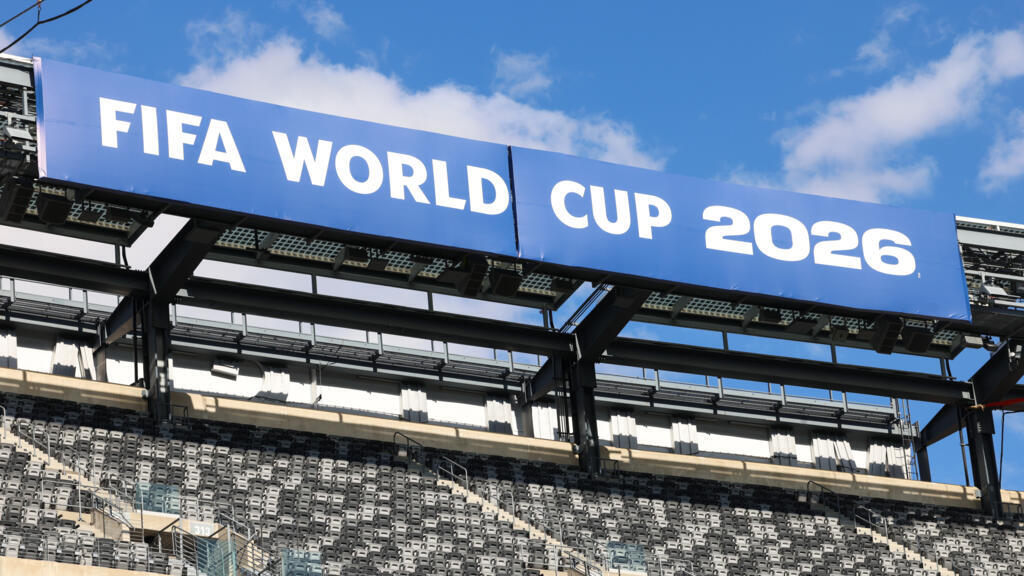
LAUSANNE, Switzerland (AFP) — FIFA’s men’s World Cup is heading into its largest and richest edition this summer, but climate specialists warn the tournament may also become the most carbon-intensive sports event yet recorded.
David Gogishvili, a geographer at the University of Lausanne, told AFP the trend in football is moving in a different direction from the Olympics. “Unlike the case of the Olympic Games, where the carbon footprints have been reducing over the last several editions, this is totally opposite in the case of the FIFA men’s World Cup,” he said.
For the first time, the competition will feature 48 national teams. It will also be staged for the first time across three host nations: Mexico, Canada and the United States. While FIFA is set to earn record revenue from the event, research from the University of Lausanne, known as Unil, indicates it will “produce the largest carbon footprint in the history of international sport”.
Unil estimates the tournament’s carbon dioxide emissions at between five million and nine million tonnes. Gogishvili said that compares with “around 1.75 million tonnes” for the Paris Olympics in 2024.
The projected total is well above previous World Cup estimates. The 2018 tournament in Russia, which involved 40 fewer matches than the 2026 event, was assessed at 2.17 million tonnes of CO2. The 2022 edition in Qatar was estimated at 3.17 million tonnes, despite being held in a much smaller area; it drew criticism over stadiums that were rapidly built, oversized and air-conditioned.
One factor in 2026 is that the stadiums were already in place when the tournament was awarded, a point stressed by the “United 2026” bid in 2018. The 16 venues range from a 45,000-seat stadium in Toronto to a 94,000-capacity ground in Arlington, Texas.
The greater concern for researchers is geography. The tournament footprint stretches across North America, with more than 4,500 kilometres separating Miami and Vancouver. That scale is expected to increase the biggest emissions source at global sports events: flights taken by teams, officials, journalists and, most significantly, the “more than five million fans” FIFA is seeking to attract.
Bosnia and Herzegovina offers one example of the travel demands. Its group-stage schedule sends the team 5,040 kilometres, with matches in Toronto, Los Angeles and Seattle.
FIFA president Gianni Infantino said at COP26 in Glasgow that he was determined to fight climate change, and the governing body has promised to “measure, reduce and offset” emissions linked to its World Cups.
However, FIFA has avoided making firm climate-neutrality claims for 2026. In June 2023, the Swiss Fairness Commission, known as the CSL, reprimanded the organisation for misleading promotion of the 2022 Qatar World Cup as climate neutral.
Gogishvili said environmental researchers broadly agree that the most effective way to reduce damage from mega-events is to keep them smaller. He pointed to the International Olympic Committee’s cap of 10,500 athletes for the Summer Games as an example.
FIFA has taken the opposite path. Its main men’s tournament has grown from 32 to 48 teams, and that expansion comes one year after the Club World Cup was increased from seven teams to 32.
A 2025 report from the New Weather Institute think tank said the climate burden of an international fixture is “26 to 42 times greater than an elite match” played domestically.
The report, written by British-based Scientists for Global Responsibility, said: “A single match during the final stages of the men’s World Cup is responsible for 44,000 to 72,000 tonnes of CO2.” The authors calculated that this equals the annual emissions of between 31,500 and 51,500 cars in Britain.
Gogishvili said FIFA’s “insatiable appetite for growth” means extra fixtures bring “more athletes, more fans, more hotel infrastructure, more flights, it’s kind of a never-ending cycle.”
The pattern is set to continue. The 2030 World Cup will take place in six countries across three continents, beginning with three matches in Argentina, Uruguay and Paraguay before Morocco, Spain and Portugal host the other 101 games.
Saudi Arabia will stage the 2034 World Cup. Its climate is similar to Qatar’s, but the country is far larger and the tournament will include 40 more matches than in 2022.
FIFA’s commercial links have also drawn scrutiny. Saudi Aramco, the world’s biggest oil company, became a major FIFA sponsor in 2024.
Gilles Pache, a professor at Aix-Marseille University, wrote in the Journal of Management Research in 2024: “It would seem that FIFA’s environmental denial will continue.”
Syndicated from Jamaica Observer · originally published .
Legal context · powered by Jurifi
Get the legal angle on this story. Pick a prompt and Jurifi's AI will explain it using Jamaican law.
AI replies are based on Jamaican law via Jurifi. Not legal advice.
Other coverage

U.S. SOCCER FEDERATION OFFICIALLY LAUNCH JOINT BID TO HOST FIFA WOMEN’S WORLD CUP 2031™
Jff
Brightline partners with Miami Host Committee to support 2026 FIFA World Cup mobility plan
Cnweekly
JFF misses out on FIFA’S $2-billion payout - Local stakeholders rue opportunity for nation to capitalise on World Cup qualification
Jamaica Star
Lance Neita | Football, anyone?
Jamaica Gleaner
Advocaat returns to lead Curaçao into historic World Cup journey
Cnweekly