
Jamaica plans wider cancer screening and treatment with IAEA backing
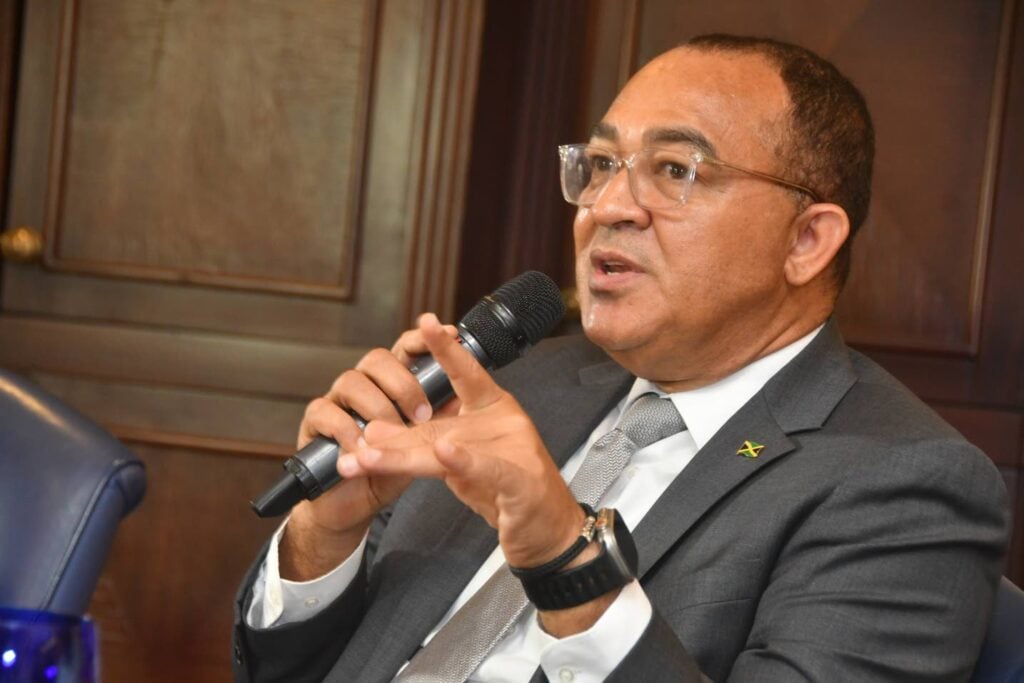
Jamaica is in line for assistance from the International Atomic Energy Agency as the Government prepares a major buildout of public cancer services over the next two years.
Health and Wellness Minister Dr Christopher Tufton disclosed the plan after talks with the Vienna-based agency during the 79th World Health Assembly in Geneva, Switzerland. The assembly, which serves as the World Health Organization's decision-making forum, runs from May 18 to 23 and brings health leaders together to examine urgent health issues and policy action.
Tufton said the administration wants to sharply increase cancer screening and treatment in the public system, with breast cancer detection among the main priorities. He said mammography in public healthcare had once been “almost non-existent”, but the ministry is now looking to add screening at no fewer than six more hospitals and to examine whether upgraded health centres can deliver the service at the primary-care level.
“We want to see more than a doubling of capacity of both cancer treatment and cancer screening in the public system, and the IAEA would be helping us with that,” Tufton said.
An IAEA technical mission is expected in Jamaica in the months ahead to inspect current facilities and assist with shaping a longer-term development plan. That assessment will take in the country's linear accelerator, or LINAC, services in Kingston and Montego Bay, which support radiation treatment for cancer patients.
The visiting specialists are expected to identify needed improvements and consider whether another treatment facility could be established, possibly in central Jamaica, to make care easier to reach. Tufton said the wider programme also covers stronger diagnostic services, especially mammography, as part of efforts to find cancers earlier and improve treatment results.
He said equipment alone will not solve the gap, noting that training and staffing will be central to the expansion. “The machines have to be managed by people and we are limited in that regard, so we are trying to work out a programme with them in conjunction with the University of the West Indies or any other institution for training more Jamaicans, or accessing better human resource capacity,” he said.
Tufton also said Jamaica has raised concerns about keeping highly specialised cancer equipment serviced and maintained, and has asked the IAEA to help create more dependable technical support arrangements. The collaboration is intended to expand services while making the country's cancer-care system more durable, at a time when demand is growing and specialist capacity remains constrained.
Syndicated from Cnweekly · originally published .
Legal context · powered by Jurifi
Get the legal angle on this story. Pick a prompt and Jurifi's AI will explain it using Jamaican law.
AI replies are based on Jamaican law via Jurifi. Not legal advice.
Other coverage

Policy shifts needed to take advantage of health-care opportunities – Minister of Health and Wellness at Jamaica World Population Day 2025
Planning Institute of Jamaica
CVM News At Noon: May 18, 2026 | @CVMTVNews
CVM TV News (Video)Watch
, 10 all-in-one computers donated by PAHO/WHO and the Government of India
MOH — Ministry of Health and Wellness (Video)Watch
Todds Hopeful Coming Out Of Meeting With Transport Ministry | Midday News
Television Jamaica (Video)Watch
Government to roll out $50 million pilot programme to combat period poverty in schools
Our Today