

Jamaican Government pushes back on coastline access as public beach dispute heats up
The Government of Jamaica is dismissing reports suggesting that only 1% of Jamaica’s coastline is accessible to the public, portraying the claim as false and self-serving.
The administration also notes that there are ongoing measures to improve beach access as part of a broad policy push.
Leading the push back is Water, Environment and Climate Change Minister Matthew Samuda who rejected recent international coverage that Jamaica’s coastline is largely off-limits.
He labeled the reports as “complete, total nonsense,” a “fallacy,” and a “lie,” insisting that repeating such narratives undermines the country’s work and diverts attention from concrete solutions.

He cited government data indicating that 21% of the coastline is designated public beach, with 17% free and unencumbered, underscoring that a meaningful portion of the shoreline remains accessible to Jamaicans.
“The reality is, if we look at the management of our public beaches over the years, because we have been through several decades of economic malaise, we’ve not done particularly well with free public beaches. It is why, even with the 1956 act and the amendment done by former prime minister Michael Manley we went to a licensing regime because we simply didn’t have the funds to maintain these public spaces with free access,” he noted.
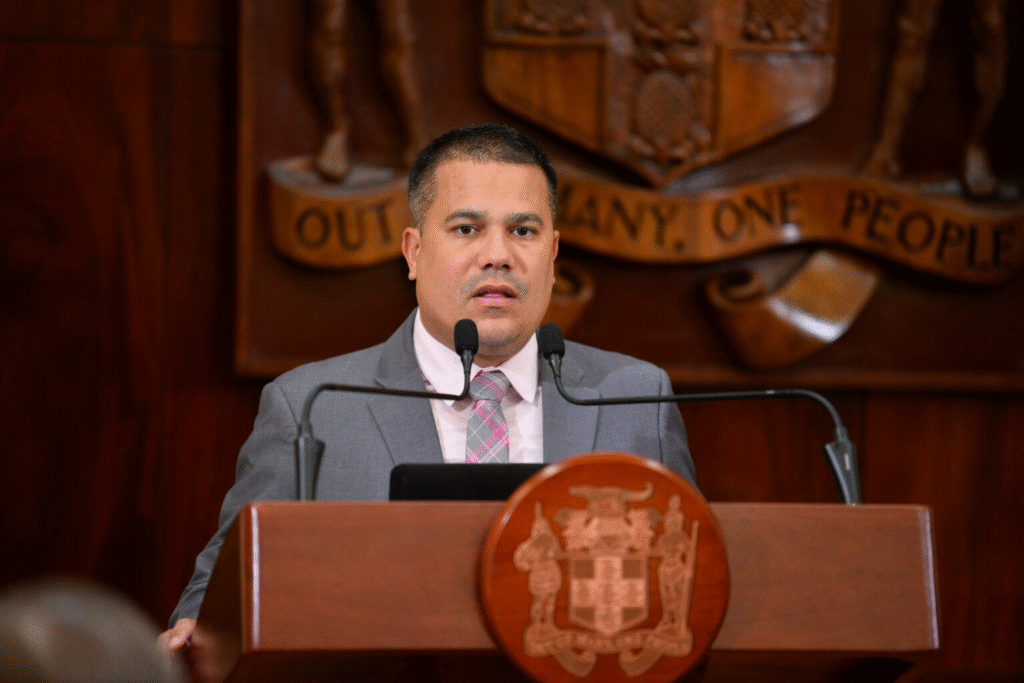
Most of these beaches do have a nominal charge that goes into cleaning the bathrooms that goes into security that goes into lights for parking areas that absorb some of the costs that exist beyond the local debate. There are concerns about the impact of some of the information being circulated. Tourism remains one of Jamaica’s most important economic drivers, and the country’s beaches are among its recognizable assets.”
The Minister added: “Several beaches have been identified for beach upgrades across five parishes. We are investing in beach access. Beach access is a buzzword term or a popular term to mention, but beach access requires roads, it requires public infrastructure that can manage crowds, parking lot security monitoring, lifeguard stations, bathrooms. It does require some commercial activity to be able to take place. All of that takes investment, and the government is investing at an unprecedented rate in creating genuine beach access.”
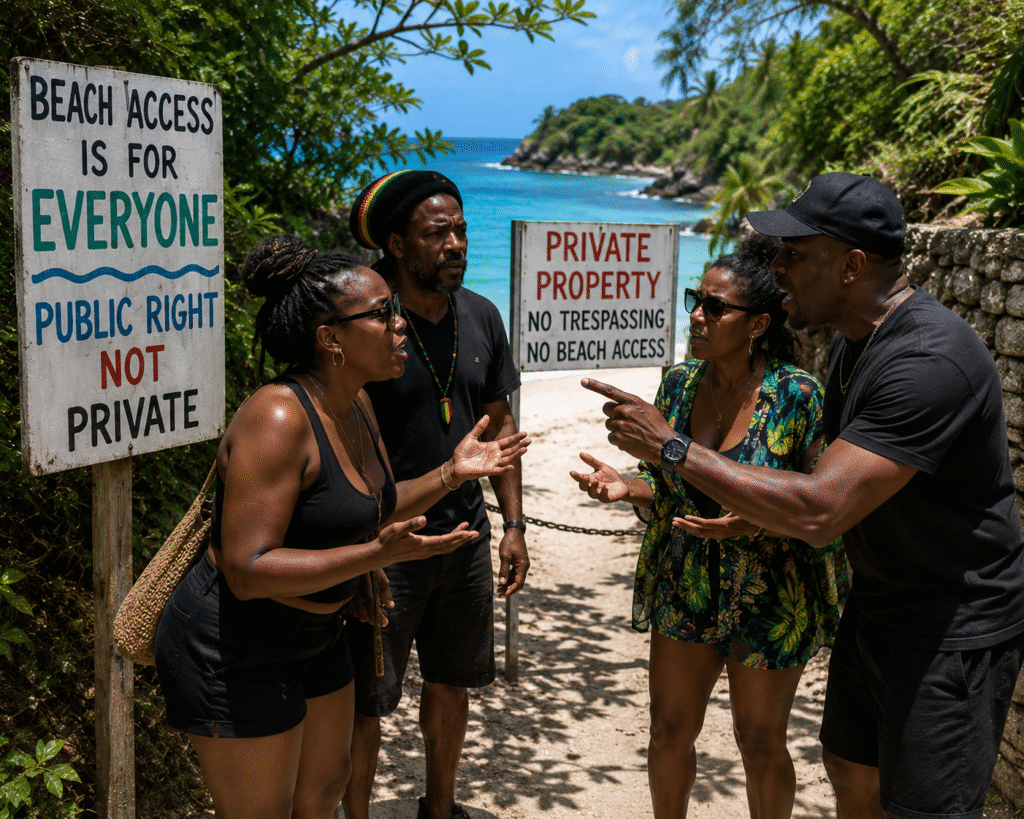
Public access to beaches sits at the center of a government drive, with Prime Minister Dr. Andrew Holness having taken a leading role on the issue. Officials have acknowledged maintenance and oversight challenges but argued that recent investments and policy frameworks mark tangible progress, including the potential for public-private partnerships to expand access and improve facilities.
Samuda acknowledged the complexity of public-beach management, noting that decades of economic challenges have strained maintenance and funding. He emphasized that, while licensing regimes and cost-recovery measures have been in effect, steps are underway to ensure Jamaicans benefit from public spaces, even as discussions continue about the cost of access and the need for responsible stewardship.
Parliamentary remarks by Holness provided context for the administration’s approach, but officials stressed that the Beach Access and Management Policy lays out a clear plan and direction for managing the island’s beaches, with a focus on public lands and access for both residents and visitors. The prime minister’s comments in recent sessions were framed as background to a longer-running policy debate rather than a new statement of intent.
Officials highlighted a multi-parish beach upgrade programme designed to expand access and improve infrastructure. The package includes improving roads to beaches, crowd management, parking, security, lifeguard stations, and bathroom facilities. They argued that access is inseparable from related infrastructure and concluded that the government is investing at an unprecedented rate to create genuine beach access while safeguarding environmental resources.
Critics, including some business owners and local residents who rely on beach-related activities, have long argued that resort development and large-scale hotels have limited public access and undermined traditional livelihoods. While acknowledging tensions with developers, Samuda asserted that the government’s strategy aims to balance public enjoyment with conservation and revenue considerations.
As the debate over access continues, officials said the government would provide ongoing updates and emphasize practical, investable solutions. The industry and civil society groups will be watching closely to see how policy commitments translate into tangible improvements on the ground.
Syndicated from Our Today · originally published .
Legal context · powered by Jurifi
Get the legal angle on this story. Pick a prompt and Jurifi's AI will explain it using Jamaican law.
AI replies are based on Jamaican law via Jurifi. Not legal advice.
Other coverage

Government to Release Public Lands for Legal Acquisition by Jamaicans
Ministry of Education
Deportee deal draws fire
Jamaica Gleaner
Jamaica Expands Global Security Cooperation to Close Off Havens for Criminals
Office of the Prime Minister
Holness warns of criminals in the diaspora
Jamaica Observer
Post Cabinet Press Briefing || June 17, 2026
PBC Jamaica (Video)Watch