
Hotel association says weak resort infrastructure could stall Jamaica tourism gains
WESTERN BUREAU: Jamaica could fall behind other Caribbean destinations unless the Government steps up spending on roads, drainage, water supply and wider public infrastructure in the island's resort centres, Jamaica Hotel and Tourist Association (JHTA) President Christopher Jarrett has cautioned.
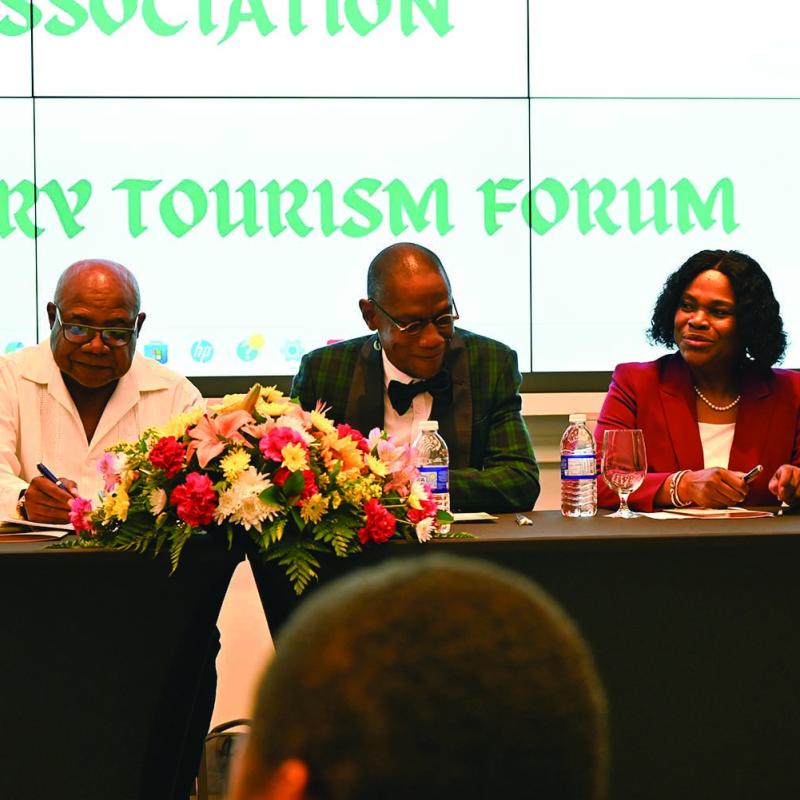
At the association's 65th annual general meeting on Saturday, Jarrett said ongoing capital work in tourism hubs is needed if the country is to stay attractive in a global travel market that is growing more crowded. He noted that while the sector has shown strength in bouncing back from Hurricane Melissa and the COVID-19 pandemic, recovery on its own will not secure lasting success.
"Our tourism product cannot continue to expand while the infrastructure supporting it struggles to keep pace," Jarrett told delegates, adding that "resilience should never become an excuse for complacency."
He cited Negril as a sharp illustration of the problem. Although the west coast resort remains one of Jamaica's best-known tourism brands and a significant earner of foreign exchange, operators there still face poor drainage, repeated flooding, worn road networks, unreliable water service and weak street lighting.
Jarrett said comparable pressures are surfacing in Montego Bay, Ocho Rios, Falmouth, Kingston, Port Antonio, the South Coast and other emerging tourism areas, each of which needs sustained public investment to keep pace with industry growth.
"These are not simply operational inconveniences," he said. "They affect visitor satisfaction. They increase operating costs. They influence investor confidence. And ultimately, they affect Jamaica's ability to compete."
The hotel sector leader urged that spending on roads, drainage, transport links, ports, water systems and shared public spaces be treated as core economic strategy rather than ordinary maintenance projects.
"Infrastructure is not a luxury. It is the foundation upon which every successful tourism destination is built," Jarrett said.
He argued that if Jamaica intends to meet Vision 2030 targets and hold its place among the Caribbean's top tourism markets, public infrastructure upgrades must move at the same speed as expansion in the hospitality sector.
"Every improvement to our tourism infrastructure strengthens the visitor experience, attracts new investment, creates employment and improves the quality of life for the communities that support our industry," he said.
Jarrett maintained that money spent on tourism-related infrastructure should be seen not as a cost but as among the country's highest-yield investments, since stronger resort towns can drive jobs, small business growth, tax receipts, private capital and wider community prosperity.
"When our ports improve, communities prosper. When transportation networks improve, businesses flourish. When resort towns are modernised, Jamaica becomes more competitive. And when Jamaica becomes more competitive, every Jamaican benefits," he said.
Syndicated from Jamaica Gleaner · originally published .
Legal context · powered by Jurifi
Get the legal angle on this story. Pick a prompt and Jurifi's AI will explain it using Jamaican law.
AI replies are based on Jamaican law via Jurifi. Not legal advice.