
OT Equity Analysis | FESCO — Energy Competition & Retail Disruption
The Underdog That Refuses to Stay Fourth
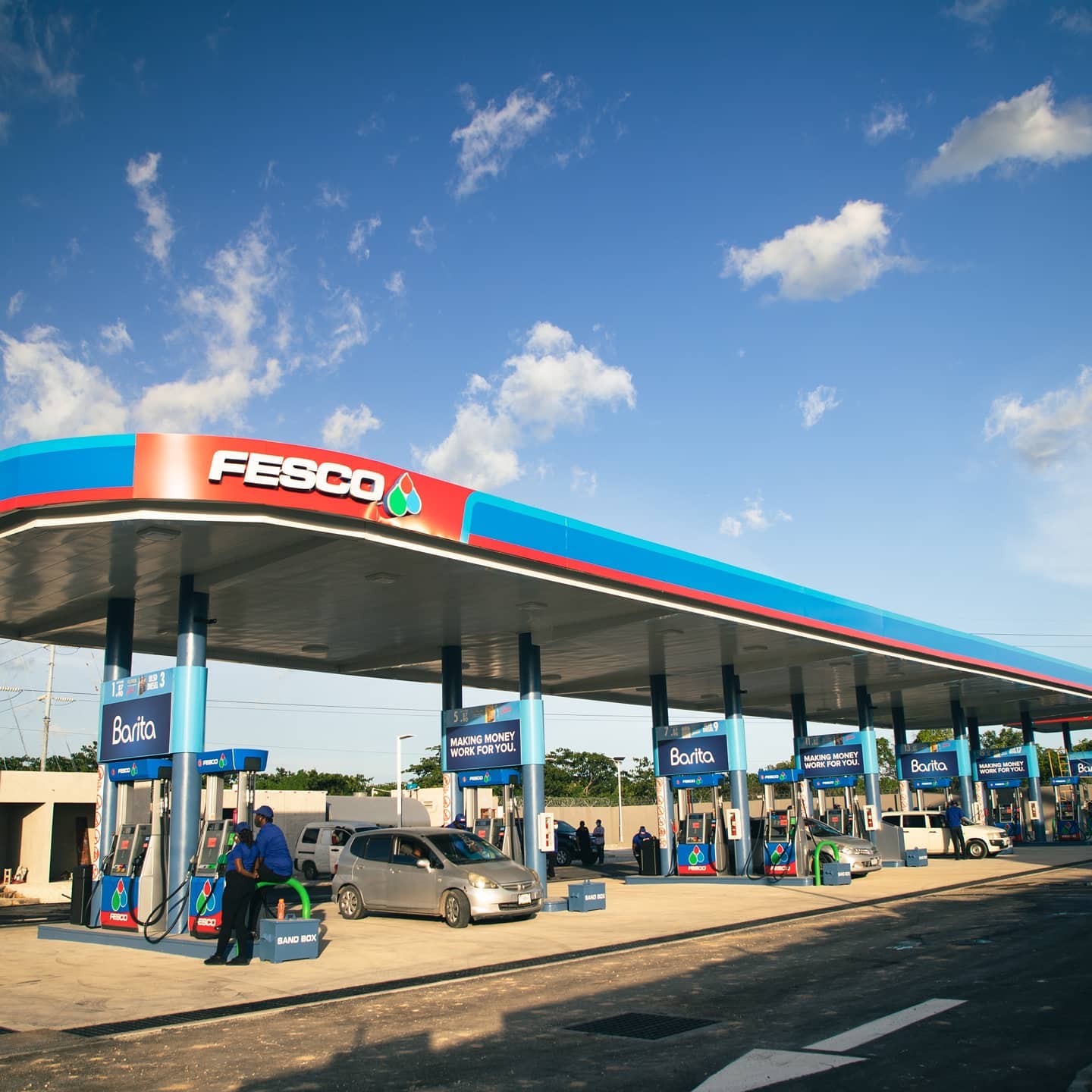
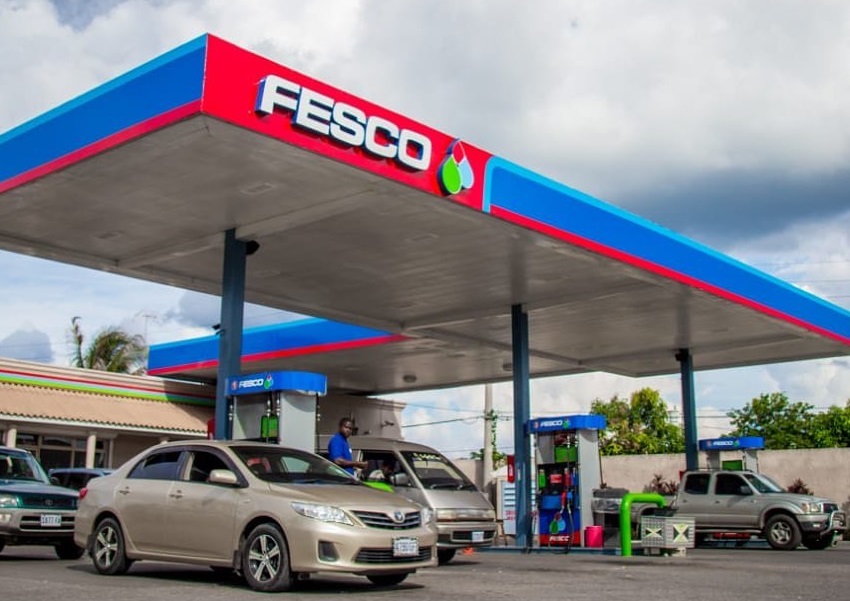
When five independent service station owners walked away from their multinational brand arrangements in 2013 to form Future Energy Source Company Limited, the industry’s reaction was polite scepticism. Its international competitors (Total Energies, Texaco, Rubis) had the network advantages, the brand recognition, and the deep capital. What chance did a locally owned upstart have?
Twelve years later, the answer is being written in revenue. For the financial year ended March 31, 2025, FESCO delivered a 20 per cent increase in gross profit and a 12 per cent increase in net profit attributable to shareholders, year over year, with book value of equity reaching J$2.7 billion. Full-year revenue reached J$30.05 billion, an increase of 4.76 per cent compared to the prior year’s J$28.68 billion. These are not the numbers of a company playing defence. They are the numbers of a company that has correctly concluded that Jamaica’s fuel retail market is more disrupted than it looks.

Performance Overview
The table below tracks FESCO’s financial trajectory across the past four financial years, alongside its market share growth and physical network expansion.
Sources: FESCO Annual Report FY2025, Jamaica Gleaner, Jamaica Observer, StockAnalysis.com. FY2022 and FY2023 figures are approximated from publicly reported growth rates.
What the table makes plain is a company that consistently beats its own projections. At its 2021 IPO, FESCO forecast J$12.6 billion in revenue. By FY2025 it had delivered J$30.05 billion, more than 138 percent above that projection. Its IPO net profit forecast of J$430 million was exceeded by FY2025, at J$461.6 million, despite a heavier debt service load and the drag of building a brand-new LPG division from scratch. That is the profile of a management team that under-promises and substantially over-delivers.
Market share tells the same story in competitive terms. From roughly 5 per cent at IPO, FESCO has grown its share of Jamaica’s downstream fuel market to 10.1 per cent as of March 2025, up from 9.5 per cent at the close of calendar year 2023. In a market dominated by multinationals with three to four times its station count, that trajectory is remarkable.

Competitive Landscape: Where FESCO Sits
Jamaica has approximately 340 service stations nationwide, served by around 20 marketing companies. The top six brands account for the overwhelming majority of volumes. The table below shows the competitive distribution as of May 2026.
*FESCO is targeting 28 stations by December 2026. Sources: Jamaica Gleaner, Jamaica Observer, FESCO investor communications. Station counts are approximate.
FESCO’s gap to the multinationals in raw network size remains wide. TotalEnergies operates roughly 3.5 times as many stations, and Texaco nearly three times as many. But network size alone has never been the defining metric in retail energy competition. Throughput per station, margin discipline, and customer loyalty are what determine profitability, and on those measures, FESCO is closing ground fast.
It is also worth noting that TotalEnergies, recognising competitive pressure at the retail level, recently partnered with Lasco Financial Services to offer fuel discounts to taxi operators and motorists. The stated goal was to break the perception that TotalEnergies was expensive and not priced competitively. That TotalEnergies now feels the need to compete on perceived affordability speaks directly to the pressure FESCO’s deliberate slim margin strategy has introduced into the market.
Financial Analysis and Valuation
The following table provides a structured financial and valuation analysis based on publicly available disclosures and market data as of May 2026.
The most striking figure in the financial profile is the gap between FESCO’s IPO projections and its actual performance. Revenue that is 138 per cent above the IPO forecast within four years is, in any market, a strong signal of compounding competitive advantage. The company has achieved this not through acquisition or market consolidation, but through organic volume growth, deliberate pricing strategy, and a disciplined expansion of its physical footprint.
The upcoming J$300 million bond principal payment due March 2027 is the most visible near-term financial risk. However, with book equity of J$2.7 billion and record EBITDA reported for FY2025, the company is positioned to manage that liability. Management has confirmed that balance sheet strengthening ahead of debt maturities is a stated priority.
On valuation, FESCO trades on the Jamaica Stock Exchange Junior Market. Its revenue run rate of J$30 billion and growing gross profit margins position it as the most financially dynamic Jamaican-owned fuel company on the public market. Businessuite ranked it number one on the Jamaica Junior Market Power 50 and number 25 on the Caribbean Power 100. For a company that started with 14 dealer-operated stations and no proprietary brands, that standing in regional corporate rankings is its own form of valuation signal.
Sources: FESCO Annual Report FY2025, Jamaica Stock Exchange filings, Businessuite Caribbean Power 100, Jamaica Gleaner, Jamaica Observer.
The FESCO Oval Gambit and Retail Reinvention
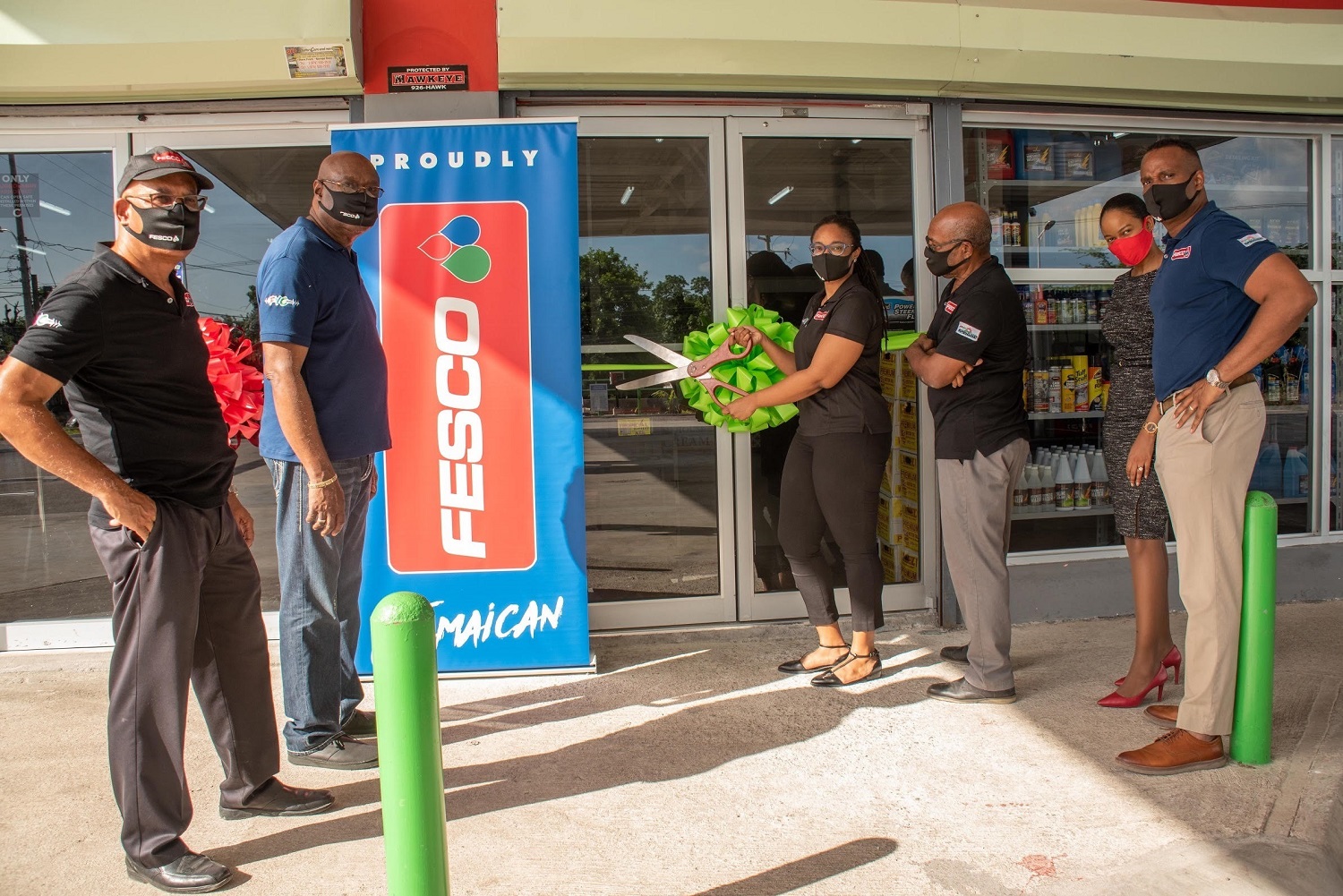
The highlight story of 2025 is not FESCO’s petroleum volumes. It is what the company is building around petroleum. The FESCO Oval station on Spanish Town Road in Kingston sits on a 1.2-acre property in the middle of a Kingston industrial estate and represents a J$500 million investment. Beyond standard fuel products, it houses a drive-through quick service restaurant, an LPG supply depot, a convenience store, a fully lit six-a-side football field, and a fully equipped homework centre with free Wi-Fi for the nearby Waterhouse community. The fuel pump is the anchor. The rest is the business.
This is a structural pivot toward the retail model that has defined fuel station evolution globally, where fuel becomes the footfall driver and higher-margin ancillary revenue becomes the profit engine. Company-owned and operated stations like FESCO Oval typically carry stronger margins than the dealer-operated model that still accounts for the majority of FESCO’s network. As more company-owned sites come online, the mix shift will matter to the bottom line.
FESCO plans to add at least four new stations by December 2026, with the Oval as the flagship proof of concept for what a FESCO-branded full-service destination looks like.
The LPG Play: Disrupting a Second Market
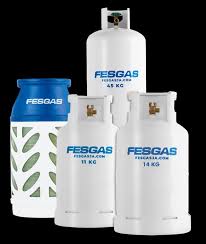
If FESCO’s core fuel business is a well-executed insurgency, its LPG division is an entirely separate front. FESGAS, the cooking gas arm of FESCO, entered the market less than two years ago and has already kept pace with internal targets in what management describes as a very competitive local LPG market. The entry was costly. FESCO nearly doubled its advertising spend in the third quarter of FY2024 to J$14 million as it built brand awareness, producing a slight dip in net profit for that period despite healthy revenue and gross profit growth.
The strategic logic is sound. Jamaica’s household energy market, dominated by bottled gas for cooking, is a recurring, loyalty-driven segment where brand trust translates into subscription-like repurchase behaviour. FESCO has also moved FESGAS distribution online via a partnership with 7Krave’s software application. That digital channel play signals a company is thinking about customer acquisition beyond a physical building. The LPG segment remains in early development, but every month of operation builds both the customer base and the distribution infrastructure that competitors would take years to replicate.

The Regulatory Environment and What It Means
FESCO’s growth story does not unfold in a vacuum. The Fair Trading Commission launched investigations in May 2026 into possible anti-competitive practices in the pricing and distribution of petroleum products, following complaints from gas station operators against large petroleum marketing companies. The Jamaica Gasoline Retailers Association, which triggered the inquiry, cited persistent concerns over contract arrangements, pricing practices, and distribution terms imposed by suppliers.
Jamaica spent US$1.75 billion on mineral fuels imports in 2025, down from US$1.9 billion in 2024, making petroleum the country’s single largest import category by value. Gasoline prices averaged US$0.97 per litre in February 2026. Any regulatory reshaping of distribution terms in this environment could benefit smaller, locally-owned players attempting to compete on merit rather than contractual lock-in. However, FESCO itself must be attentive as it grows, since a larger market share brings its own regulatory exposure.
The broader macro pressure of rising global crude oil prices, linked to geopolitical tensions including the US-Iran conflict, is squeezing the entire sector. Cost of sales at FESCO rose 7.2 percent in FY2025 to J$30.42 billion. CEO Jeremy Barnes has publicly acknowledged that local fuel prices need to adjust upward to reflect international market realities. For a company whose competitive edge rests on slim margins, the lag between global crude movements and Jamaican pump prices is a structural vulnerability worth watching.
Key Takeaways
FESCO’s story is one of the more instructive in Jamaica’s business landscape because it disproves several assumptions at once. It disproves that locally owned companies cannot build institutional scale in capital-intensive sectors. It disproves that multinationals are immune to competitive pressure from smaller, nimbler domestic challengers. And it disproves that a fuel station is primarily in the business of selling fuel.
The risks are real: a J$300 million bond payment on the horizon, a volatile global oil market, tightening margins, and a regulatory environment in active flux. But FESCO has consistently arrived ahead of its own projections on virtually every line item. It is now building the kind of multi-revenue ecosystem comprising fuel, LPG, quick-service food, convenience retail, proprietary lubricants, and community assets that insulates it from any single point of pressure.
The question is no longer whether FESCO belongs among Jamaica’s serious corporate players. It unquestionably does. The question is whether it can sustain the discipline, the margin strategy, and the operational agility that got it here as it moves from insurgent to incumbent. That transition is almost always the hardest part. At this point in time, the numbers say it is on track.
This analysis is prepared for informational purposes only and reflects publicly available financial disclosures, regulatory announcements, and market data sourced from FESCO’s Annual Report (FY2025), the Jamaica Stock Exchange, the Jamaica Gleaner, the Jamaica Observer, the Statistical Institute of Jamaica, Trading Economics, and Businessuite Caribbean. Approximate figures for FY2022 and FY2023 are derived from publicly reported year-on-year growth rates and may vary from audited actuals. This editorial does not constitute investment advice, and readers are encouraged to conduct independent due diligence before making financial decisions. The views expressed are those of the editorial desk and do not represent the position of any regulator, financial institution, or entity referenced herein.
David Welsh is an emerging Investment Analyst with a strong foundation in Economics and Management Studies. He is deeply passionate about investments, financial literacy, and organisational leadership, with a clear commitment to driving impact through finance. David has demonstrated a consistent track record of excellence across both academic and professional spheres. He currently serves as Impact Officer for the Global Shapers Kingston Hub (an initiative of the World Economic Forum) and previously held the role of President of the Young Investors Club at The University of the West Indies (UWI). His analytical and leadership capabilities were further recognised when he won UWI’s CFA Investment Research Competition. Beyond academia, David has successfully led high-performing marketing teams on both local and international stages, showcasing his versatility and strategic mindset. With a dynamic blend of technical expertise, leadership experience, and a passion for growth, he is widely regarded as a rising talent to watch in the investment landscape.
Syndicated from Our Today · originally published .
Legal context · powered by Jurifi
Get the legal angle on this story. Pick a prompt and Jurifi's AI will explain it using Jamaican law.
AI replies are based on Jamaican law via Jurifi. Not legal advice.
Other coverage

The Business Report—May 20, 2026
PBC Jamaica (Video)Watch
Tropical Battery Company Limited (TROPICAL) – Interim Financial Statements For The Second Quarter Ended March 31, 2026
Jamaica Stock Exchange
Pan Jamaica Group profits down 56% despite revenue growth
Jamaica Gleaner
Kintyre posts $531m profit on paper gains as cash from operations falls short
Jamaica Observer
BOJ pumps US$60 million into forex market this week
Radio Jamaica News Online