
OT Equity Analysis | KW: Jamaica’s Logistics and Nearshoring Bet

Prepared for Our Today | Capital Markets & Investments Desk May 21 2026
Kingston Wharves’ latest numbers show the tension between short-term margin pressure and a longer-term infrastructure story tied to Jamaica’s ambition to become a regional supply-chain platform.
Latest Financial Snapshot
Q1 2026 revenue: J$3.33B, up 18% year-on-year
Q1 2026 net profit attributable to shareholders: J$590.85M, down 22% year-on-year
Q1 2026 EPS: J$0.42, versus J$0.55 in Q1 2025
FY2025 revenue: J$12.67B, up 18% year-on-year
FY2025 shareholder profit: J$3.46B, up 33% year-on-year
Book value per share at Q1 2026: J$36.61
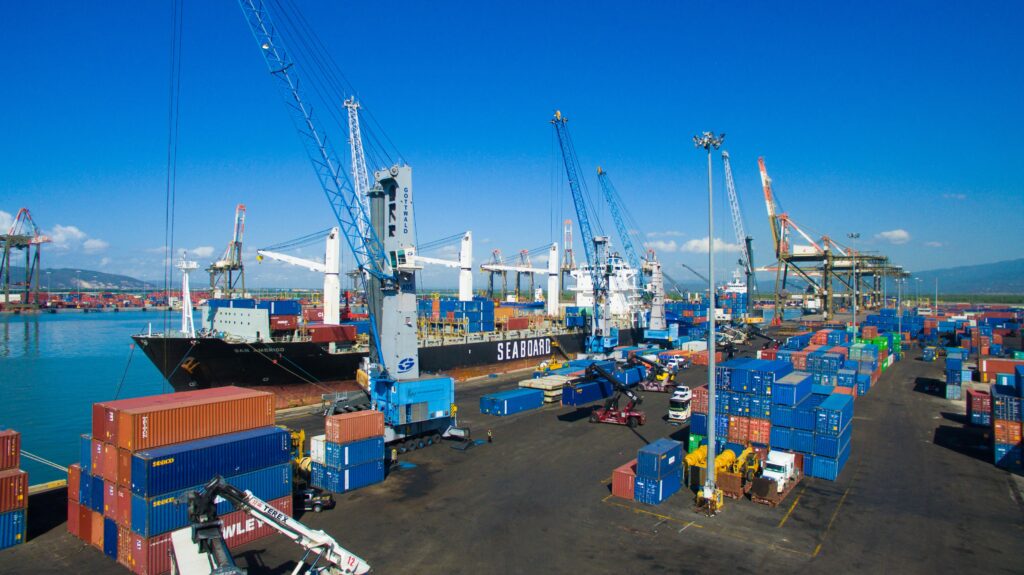
Kingston Wharves Limited has never been a stock that investors should read purely through one quarter of earnings. Its value has always sat somewhere between the income statement and the map of Kingston Harbour. The company is part operating business, part infrastructure platform, and part long-dated call option on Jamaica, finally converting its geography into a deeper logistics economy.
That is why KW’s first-quarter 2026 results deserve a more careful reading than the headline decline in profit would suggest. For the three months ended March 31, 2026, the company reported revenue of J$3.33 billion, up 18 per cent from J$2.82 billion in the prior-year period. This was not a soft top-line print. Management pointed to higher cargo volumes in Terminal Operations and stronger activity in Logistics Services, both of which speak directly to the core of KW’s commercial relevance.
The pressure came further down the income statement. Cost of sales climbed 24 per cent to J$1.98 billion, outpacing revenue growth and narrowing the benefit of the stronger volumes. Gross profit still improved by 10 per cent to J$1.35 billion, but other operating income fell sharply to J$46.7 million, administrative expenses edged higher, finance costs rose 41 per cent, and the tax charge almost doubled. By the time the numbers reached the bottom line, net profit attributable to shareholders had fallen 22 per cent to J$590.85 million, while earnings per share moved down to J$0.42.
For traders, that may be enough to pause. For longer-term investors, the more important point is that demand did not disappear. The company is not reporting a volume problem. It is reporting a cost, margin and income-mix problem in a period where Jamaica’s logistics infrastructure is being asked to carry more of the country’s growth ambition.
That difference matters. A weak quarter caused by falling demand tells one story. A quarter where revenue grows double digits but earnings are held back by operating costs, finance costs and reduced non-core income tells another. In KW’s case, the investment debate is less about whether the company remains relevant and more about whether it can turn higher throughput and logistics activity into better operating leverage.
The full-year 2025 numbers provide the stronger base case. KW ended 2025 with revenue of J$12.67 billion, up 18 per cent, while net profit attributable to shareholders rose 33 per cent to J$3.46 billion. The Terminal Operations division carried much of the weight, generating J$8.4 billion in revenue and J$3.1 billion in operating profit, supported by global auto-transhipment, bulk cargo and break-bulk activity. That is the side of the business investors understand most clearly: volumes move through the port, assets are utilised, and earnings follow.
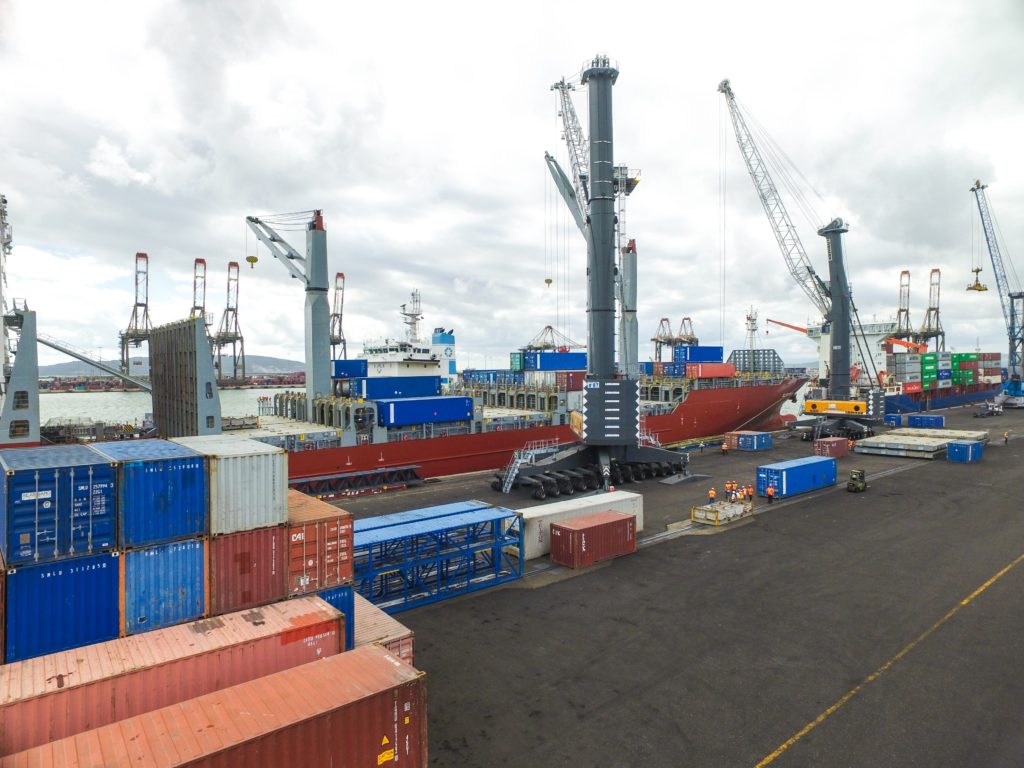
The Logistics Services division is the part of the story that requires more patience. Its FY2025 revenue increased to roughly J$4.2 billion, but operating profit declined as lower activity levels, reduced rates and higher operating costs weighed on the segment. In simple terms, KW has the platform, but the logistics segment still needs more scale, higher-value work and tighter cost discipline to deliver the kind of margins investors would expect from a true logistics compounder.
This is where the nearshoring conversation becomes more than a policy slogan. Global companies are no longer building supply chains solely around the lowest production cost. They are building around resilience, shorter delivery routes, inventory reliability and political predictability. Jamaica cannot compete with Mexico on proximity to the United States industrial base, and it cannot compete with Panama on canal economics. But Jamaica can compete as a Caribbean distribution and logistics platform if it gets the supporting infrastructure right.
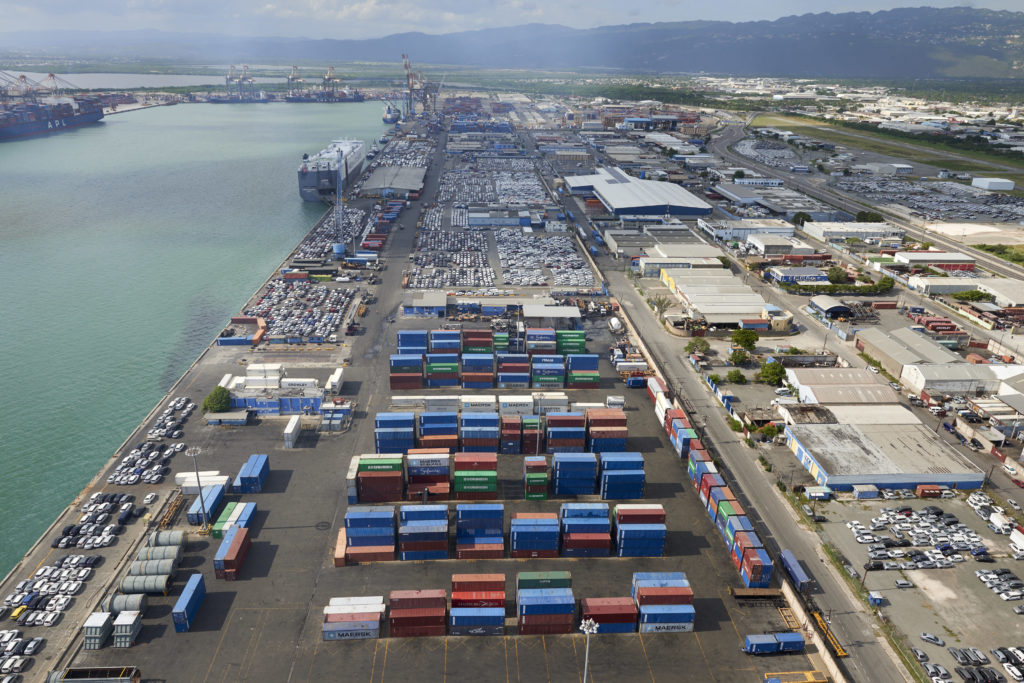
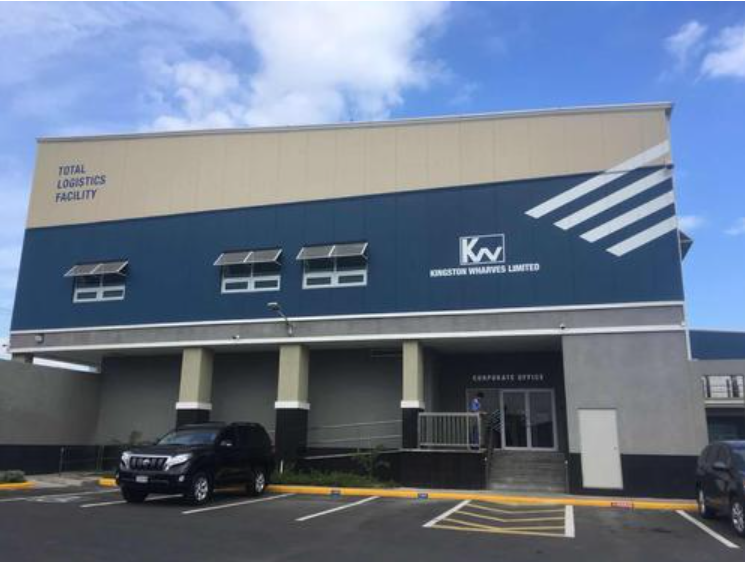
KW sits directly in that opportunity. It operates in and around the Port of Kingston, one of the country’s most strategic commercial assets. Its business reaches beyond the traditional wharf into warehousing, cold storage, port security, logistics facilities, property rental and value-added services. That makes KW one of the few listed companies through which investors can express a view on Jamaica’s ability to move beyond consumption-led imports and into higher-value trade facilitation.

The nearshoring opportunity is not only about factories relocating. For Jamaica, it is more likely to begin with storage, fulfilment, consolidation, deconsolidation, light assembly, cold-chain management, automotive logistics, spare-parts distribution, food and pharmaceutical handling, and regional inventory management. These activities do not require Jamaica to become a manufacturing powerhouse overnight. They require reliable port operations, customs efficiency, warehouse capacity, security, digital systems, energy reliability and disciplined execution.
That is exactly why KW’s margin profile matters. If Jamaica is to win more logistics activity, KW must do more than move boxes and vehicles. It must capture more value per unit handled. The market will reward revenue growth only if it becomes recurring earnings growth. The next stage of the KW thesis therefore rests on operating efficiency, better pricing, improved asset utilisation and a broader mix of logistics services that carry stronger margins.
There is also a balance sheet argument. At March 2026, KW reported total assets of J$65.87 billion and shareholders’ equity of J$52.36 billion. Book value per share stood at J$36.61. With the stock recently trading in the high J$30s, the market is not assigning an extravagant premium to the company’s asset base, even though those assets are strategically located and difficult to replicate. That does not automatically make the stock cheap, but it does suggest that investors are still valuing KW more like a traditional port operator than a broader logistics infrastructure company.
The risk, of course, is that Jamaica’s logistics-hub ambition remains an attractive narrative without enough commercial density behind it. Logistics is capital-intensive. Warehouses, equipment, technology, security systems, cold-chain infrastructure and yard space all require investment before the earnings show up. A company can look strategically important and still frustrate shareholders if returns on capital do not improve.
KW’s first-quarter numbers are a reminder of that discipline. Revenue growth is encouraging, but it is not enough. Cost of sales grew faster than sales. Finance costs rose. Taxation was heavier. Other operating income normalised. These are not small details. They are the difference between a good story and a good investment.
Still, the direction of travel remains favourable. Jamaica’s location has not changed. Regional trade complexity has not disappeared. Companies still need inventory closer to end markets. Caribbean businesses still need reliable distribution nodes. The Port of Kingston remains a strategic asset. KW remains one of the most direct listed-market beneficiaries of any serious push to deepen Jamaica’s logistics economy.
For investors, the stock should be viewed as a measured infrastructure play rather than a short-term earnings momentum trade. The near-term results may remain uneven as costs, capital expenditure and segment mix move around. But if KW can translate cargo volume, logistics demand and port-adjacent development into sustained margin expansion, the company’s earnings base could look materially stronger over the medium term.
The conclusion is not that KW is without risk. The conclusion is that the company is sitting in the right corridor of Jamaica’s economic future. It has the assets, location and operating history to benefit from nearshoring and regional logistics growth. What it now needs is execution that proves the strategy in the numbers.
In that sense, KW is more than a port stock. It is a test of whether Jamaica’s logistics ambition can become a bankable investment theme. The first quarter showed some strain, but it also showed activity. The next few reporting periods will determine whether that activity becomes earnings momentum and whether Jamaica’s logistics bet starts to deliver not just for policymakers but for shareholders as well.
Investor takeaway
KW’s latest quarter was not a demand warning. It was a margin warning. The long-term story remains tied to Jamaica’s logistics and nearshoring ambitions, but the market will need to see stronger conversion of volume growth into earnings growth.
This commentary is prepared for informational and editorial purposes only and does not constitute investment advice. Readers should conduct their own due diligence and consult a licensed financial adviser before making any investment decisions.
Syndicated from Our Today · originally published .
Legal context · powered by Jurifi
Get the legal angle on this story. Pick a prompt and Jurifi's AI will explain it using Jamaican law.
AI replies are based on Jamaican law via Jurifi. Not legal advice.
Other coverage

The Business Report—May 20, 2026
PBC Jamaica (Video)Watch
The Kingston Logistics Park
Port Authority of Jamaica (Video)Watch
Kingston Wharves reports higher Q1 revenues despite dip in net profit
Radio Jamaica News Online
The Kingston Logistics Park (KLP) is driving economic expansion in Jamaica!
Port Authority of Jamaica (Video)Watch
The Business Report—May 15, 2026
PBC Jamaica (Video)Watch