
OT Equity Analysis | Micron becomes the new test of Wall Street’s AI conviction
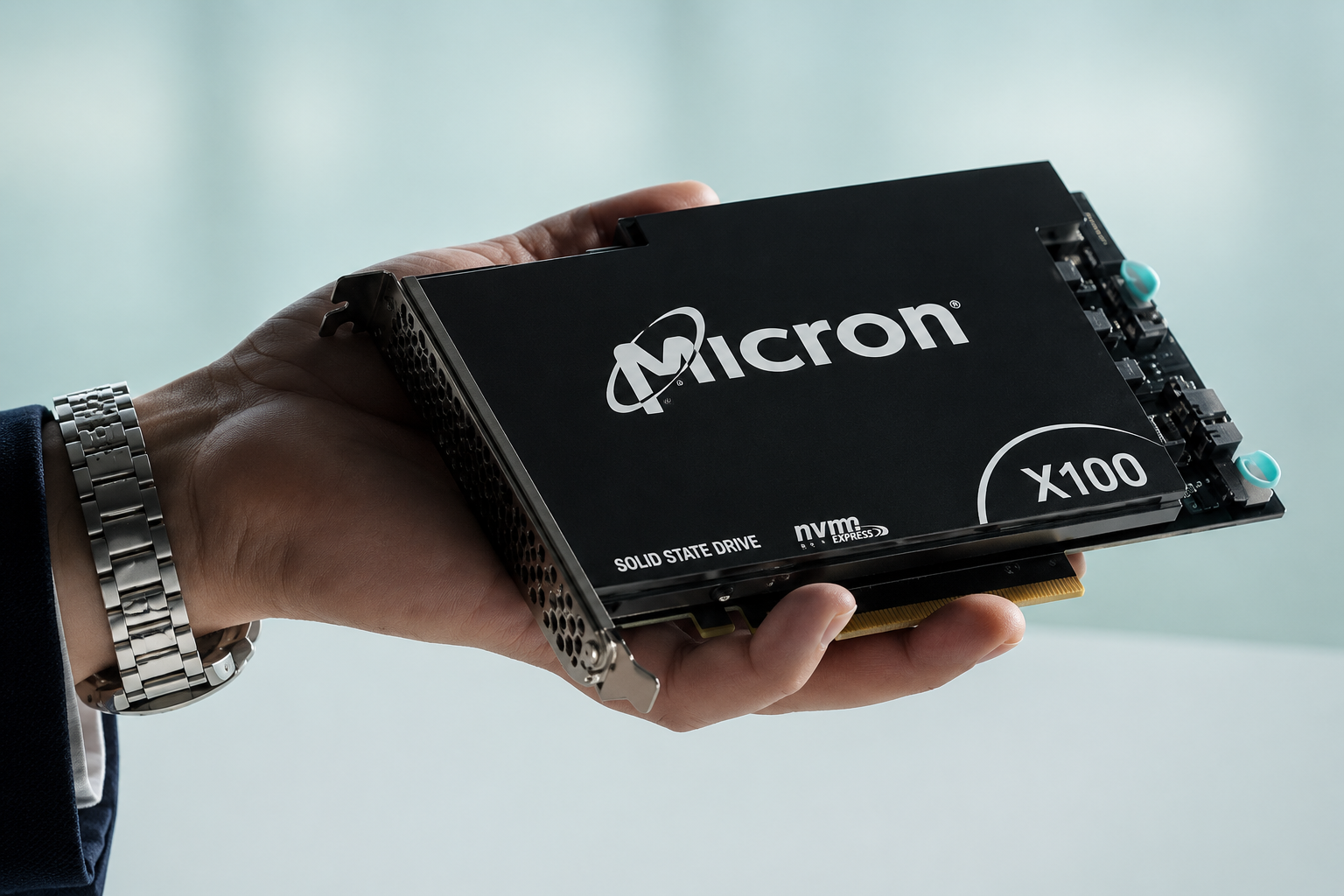
Micron Technology is no longer being viewed only as a cyclical memory-chip producer. This week, it has become a live test of whether the artificial intelligence trade still has room to broaden beyond the market’s usual giants.
Micron Technology has moved from being seen as a cyclical memory-chip company to one of the market’s clearest tests of whether the artificial intelligence boom still has room to run.
The Boise, Idaho-based semiconductor company, which trades under the ticker MU, has become one of the most closely watched names on Wall Street as investors continue to search for companies that sit deeper inside the AI supply chain. While Nvidia remains the face of the AI buildout, Micron is increasingly being treated as one of the companies supplying the infrastructure that makes that buildout possible.
The reason is simple: artificial intelligence does not only need powerful processors. It also needs vast amounts of high-performance memory and storage. As AI models become larger and more complex, demand for high-bandwidth memory, DRAM and advanced storage solutions has moved from being a background technology issue to a boardroom-level priority for the largest technology companies.
That shift is now showing up in Micron’s share price.
Micron’s stock rose sharply on Monday after the company announced a strategic agreement with Anthropic, one of the leading artificial intelligence companies behind the Claude family of AI models. Under the arrangement, Micron is expected to supply and work with Anthropic on memory and storage technologies designed for next-generation AI infrastructure.

The market read the announcement as more than a standard commercial partnership. It reinforced the view that memory chips are becoming a scarce and strategically important part of the AI economy. For years, memory chipmakers were often valued like commodity producers, with earnings rising and falling based on supply cycles. Today, investors are increasingly asking whether that model has changed.
Micron is now being valued less like a traditional memory producer and more like an infrastructure supplier to the AI era.
That is a powerful change, but it also raises the stakes. The company is scheduled to report earnings this week, and the market will be watching closely for evidence that the optimism is being matched by real revenue, pricing power and margin expansion. A strong report could strengthen the argument that AI-related demand is broadening beyond the usual mega-cap technology names. A weak report, or even a good report with cautious guidance, could quickly test how much expectation has already been built into the stock.
For investors, the central question is whether Micron’s recent rally reflects the beginning of a structural re-rating or whether the market has simply moved too far ahead of the fundamentals.
The bull case is clear. AI data centres require more memory per system, supply remains tight, and the largest technology companies are still racing to secure capacity. If this demand continues, Micron could benefit from both higher volumes and better pricing. That would make the company one of the more direct beneficiaries of the AI capital expenditure cycle.
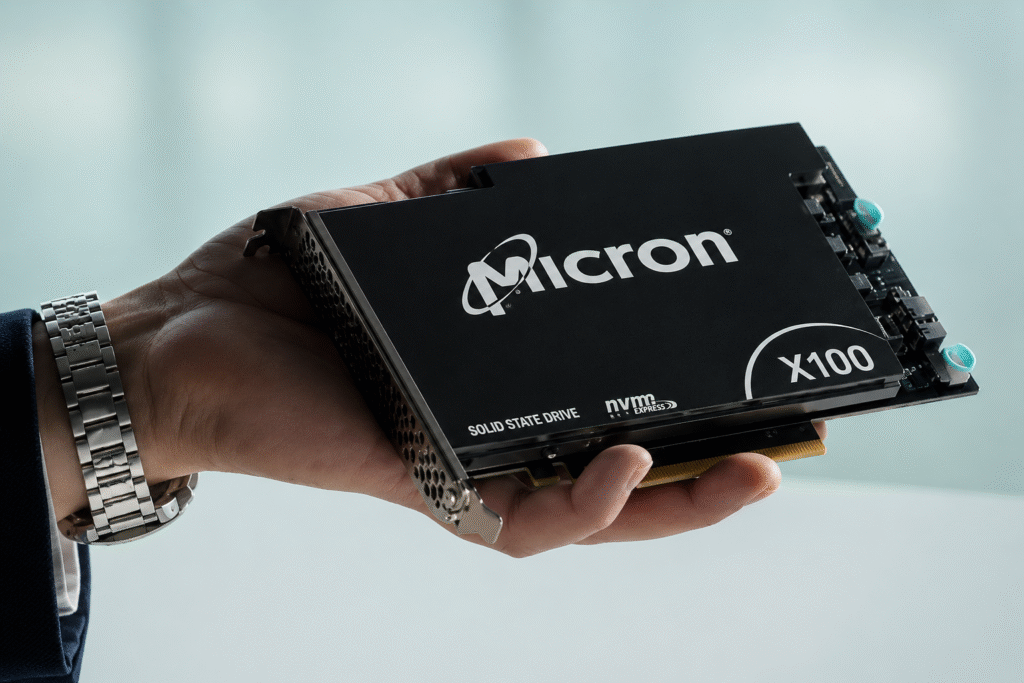
The bear case is also important. Memory remains a cyclical industry. When supply eventually catches up, pricing can fall quickly. The same industry that looks undersupplied today can become oversupplied if too much capacity is built. At the same time, Micron’s share price has already had a major run, meaning expectations are high and the margin for disappointment is thinner.
This is what makes Micron the stock of the day. It is not simply moving because investors like the AI story. It is moving because the company now sits at the centre of a larger debate: is the AI trade still expanding, or is the market becoming too crowded in the same theme?
For Wall Street, Micron’s upcoming earnings may provide one of the clearest signals yet. If the company shows that AI demand is translating into stronger pricing, higher margins and durable order visibility, the rally could gain further credibility. If not, the stock may remind investors that even the best growth stories can become vulnerable when expectations move faster than results.
Micron’s rise shows how quickly the market can redefine a company when the technology cycle changes. Once viewed mainly through the lens of memory-chip volatility, it is now being watched as a critical supplier to the AI economy.
That makes MU more than a semiconductor stock this week. It makes it a referendum on the next leg of the artificial intelligence rally.
Syndicated from Our Today · originally published .
Legal context · powered by Jurifi
Get the legal angle on this story. Pick a prompt and Jurifi's AI will explain it using Jamaican law.
AI replies are based on Jamaican law via Jurifi. Not legal advice.
Other coverage

Balancing the Demand and Supply of Cement | News at 7 PM | @cvmtvnews
CVM TV News (Video)Watch
Funded and Focused Episode 77
PBC Jamaica (Video)Watch
US export ban on Anthropic’s AI models further strains alliances
Jamaica Inquirer
"The government still can't tell us what Jamaica gets out of this deal."
Jamaica PNP (Video)Watch
Cement Supplies Stabilising
Radio Jamaica News Online