

OT Equity Analysis | Shutterstock Faces a Standalone Reckoning After Getty Deal Collapses

The failed Getty merger has forced investors to revalue Shutterstock on its own earnings power, competitive position and strategic options.
Ticker: SSTK | Exchange: New York Stock Exchange
Shutterstock is today’s second Stock of the Day because the collapse of its proposed merger with Getty Images has sharply changed the investment case. The two visual-content companies had planned a transaction valued at roughly US$3.7 billion, but Getty moved to terminate the deal after the UK Competition and Markets Authority required Shutterstock to divest its editorial business as a condition for approval. The market reaction was immediate and severe, with Shutterstock shares falling sharply as investors removed the takeover premium from the stock.
This is a classic deal-break catalyst. Before the regulatory setback, shareholders could assess Shutterstock partly through the expected benefits of the combination: larger scale, a broader content library, cost savings and a stronger position in a rapidly changing licensing market. With the deal now effectively off, the company must be valued again as a standalone business. That forces attention back to organic revenue, customer retention, margins, competitive pressure and management’s next strategic move.
Shutterstock operates a marketplace for licensed images, videos, music and creative assets. Its customers include advertisers, publishers, agencies, businesses, content creators and marketing departments that need legal access to visual and audio material. The company earns revenue through subscriptions, enterprise contracts, on-demand purchases and licensing arrangements. It has also added businesses over time, including creative-asset platforms and editorial-content assets, to widen its product offering.

The regulatory issue centered on editorial content. Editorial images and video are especially important for news organisations, publishers and media businesses that need real-time and archival coverage of public events, celebrities, sports, politics and culture. UK regulators were concerned that the combined Getty-Shutterstock entity could reduce competition in that market. The required remedy – a divestiture of Shutterstock’s editorial business – was significant enough that Getty concluded the transaction no longer made strategic sense.
For Shutterstock, the immediate financial impact is not an accounting loss from operations but a change in market expectations. Investors had been valuing the stock with some probability that the Getty combination would close. Once that possibility weakened, the market had to reprice Shutterstock based on its own growth outlook. That is why the share-price decline matters: it reflects not only disappointment over a failed transaction, but also renewed skepticism about the standalone business.
The company’s financial picture now has to be judged on fundamentals. Shutterstock has historically generated revenue from a large customer base and a deep digital library, but the content-licensing market has become more difficult. Customers have more alternatives, budgets are under pressure, and technology is changing how images and marketing material are created, sourced and priced. In that environment, scale and trusted rights management still matter, but pricing power is not guaranteed.
Valuation is therefore more complicated than a simple post-deal discount. A lower share price may make Shutterstock appear cheaper, but the relevant question is whether earnings are stable enough to justify that view. Investors will likely focus on revenue growth, adjusted earnings, free cash flow, subscription trends, enterprise demand and management’s capital-allocation plan. The company may also face pressure to explain whether it will pursue another strategic partner, sell non-core assets, repurchase shares or focus on rebuilding organic growth.
The strategic angle is the future of professional content licensing. Media companies, advertisers and corporations still need legally cleared, high-quality content. Rights, indemnification and reliability matter, especially for large customers. But the industry is no longer defined simply by the size of a photo library. Distribution, search functionality, licensing models, video, music, editorial depth and customer workflow integration all matter. Shutterstock must show that it can remain relevant without the scale benefit of Getty.
There are several risks. First, the failed merger may leave management needing a new strategic plan at a time when the industry is already under pressure. Second, the sharp share-price decline can affect investor confidence and employee morale. Third, competition in creative content remains intense, with customers able to access a wider range of tools and platforms. Fourth, if enterprise customers slow spending, subscription and licensing growth could weaken. Fifth, the editorial business that made the deal difficult for regulators may still require investment to maintain its competitive position.
Shutterstock deserves attention today because the market is no longer pricing a merger story; it is pricing a standalone company facing structural change. The stock’s sharp move has created a fresh analytical question: whether the business has been overly discounted or whether the collapsed transaction revealed deeper concerns about growth and competitive positioning. The balanced read is that Shutterstock remains a real company with valuable assets, but the burden of proof has shifted back to management.
Disclaimer: This article is for informational purposes only and does not constitute investment advice.
Syndicated from Our Today · originally published .
Legal context · powered by Jurifi
Get the legal angle on this story. Pick a prompt and Jurifi's AI will explain it using Jamaican law.
AI replies are based on Jamaican law via Jurifi. Not legal advice.
Other coverage
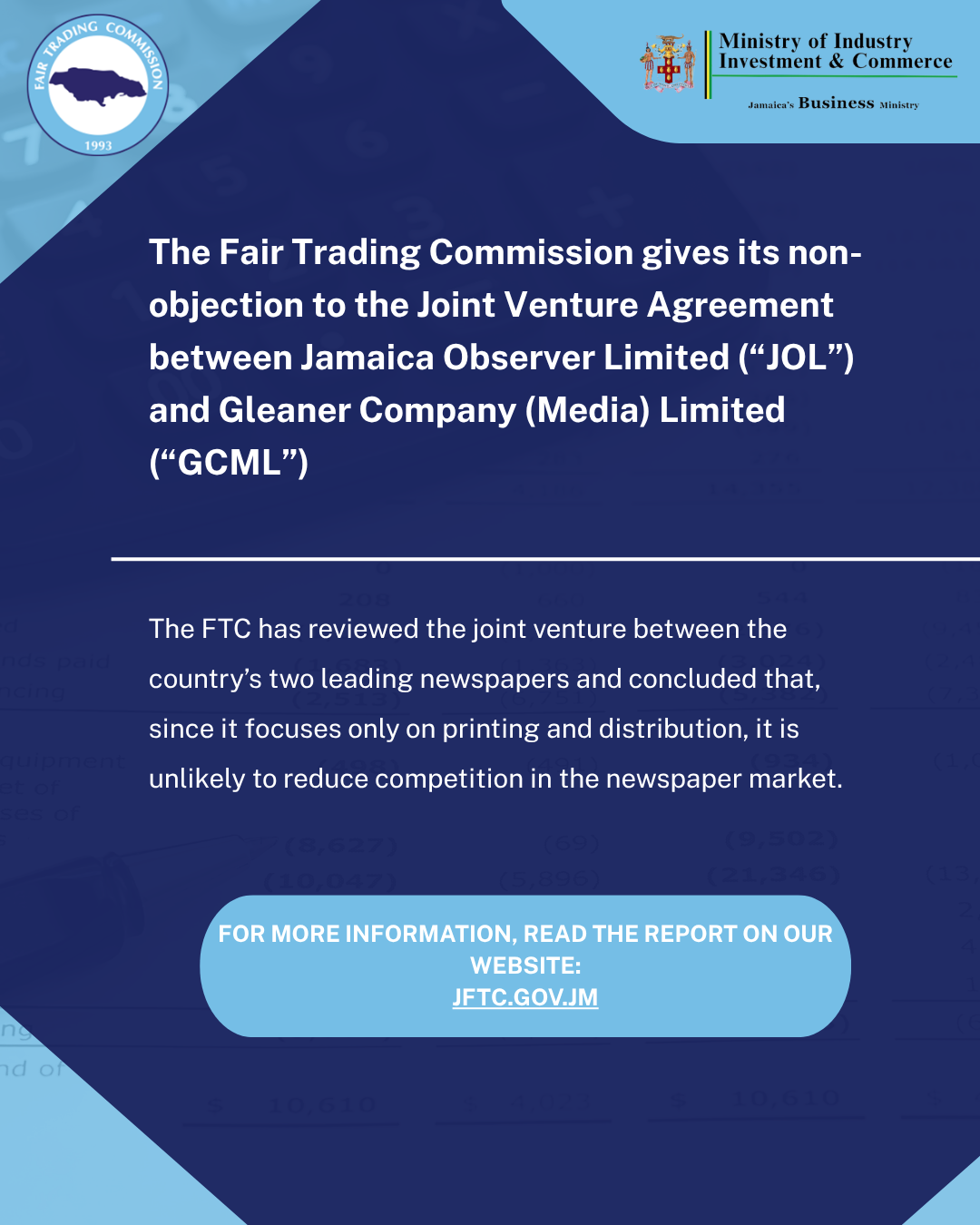
FTC gives non-objection to Jamaica Observer and Gleaner Company Joint Venture
Jftc
Raquel Seville and Keisha Bailey | Scotia's Exit and the $54-Billion Question
Jamaica Gleaner
Yaneek Page | How much do you know about the hidden economy that is quietly generating billions of US dollars in digital commerce?
Jamaica Gleaner
Companies in preparation for JSE Micro Market listing
Jamaica Gleaner
How Competitive Are Jamaica’s Banks? A New Study Has Answers
Jftc