Committee Urges Sweeping Governance Reform at University Hospital of the West Indies

A committee assembled by the Government is urging an end to the long-standing arrangement in which the chair of the University Hospital of the West Indies' (UHWI) medical committee occupies a board seat while the chief executive officer does not, according to findings released on Tuesday.
That reversal of usual hierarchy stands among the central proposals in a 34-page assessment that flagged “chronic and egregious” lapses in governance at the Caribbean's oldest teaching hospital and pressed for far-reaching legal, financial and operational changes.
Fitzgerald Mitchell currently holds the CEO post, while Dr Carl Bruce, who also serves as the medical chief of staff, chairs the hospital's medical committee.
“There is no provision in the 1948 UHWI Act for the CEO to be a board member. The consequence of this anachronism is that while the chair of the Hospital Medical Committee is expected to report to the CEO under the PBMA (Public Bodies Management and Accountability Act), the (UHWI) Act requires the CEO to report to the chair as part of the CEO's general reporting relationship to the board,” the report stated, adding: “The anomaly must be eliminated and the scope of responsibility for both positions needs to be clearly articulated.”
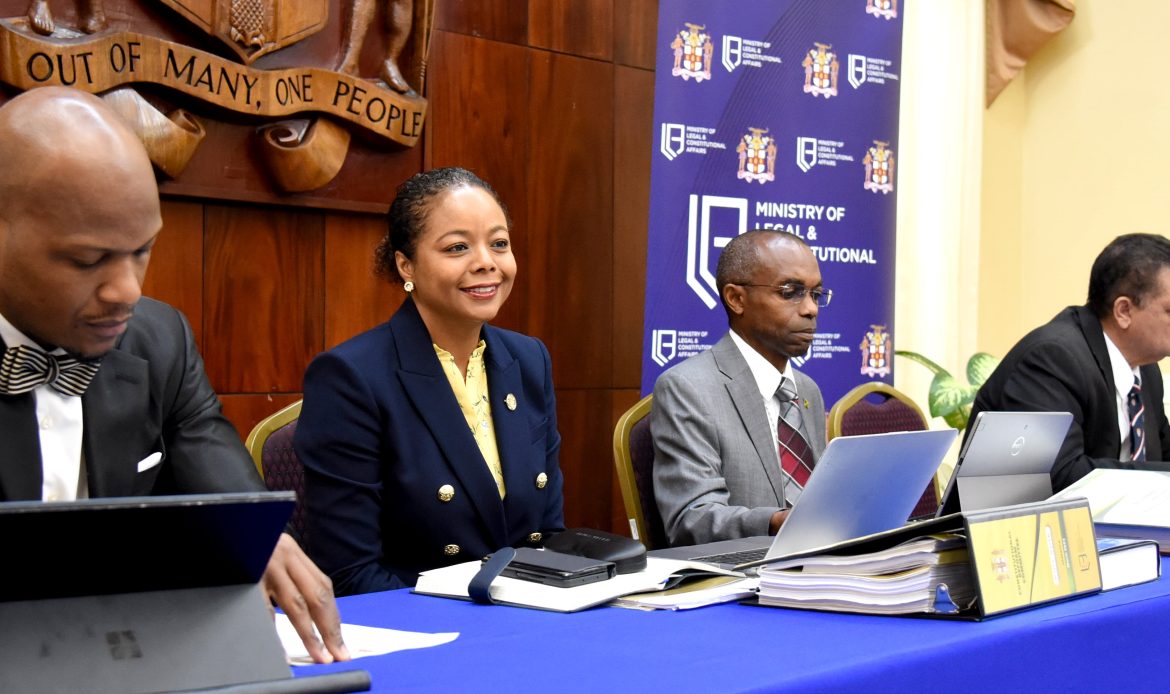
The Institutional Review Committee submitted its findings to Health and Wellness Minister Dr Christopher Tufton, following an examination set in motion by a scathing Auditor General's report published in January. Tufton had handed the panel, led by former Private Sector Organisation of Jamaica president Howard Mitchell, a four-month window to complete its work.
Speaking at a news briefing on Tuesday, Mitchell described the present board configuration as a “cardinal sin” and said the institution is in a “critical state… ICU”.
He stressed that the document is not aimed at punishing individuals but at lifting transparency, accountability and patient services. “This is an opportunity to turn the page on what has happened over ... many decades. And take it back to the standard of performance, and the reputation that the University Hospital of the West Indies had when people older than everybody, [used to] refer to it as UC.”
Tufton noted the report had gone before Cabinet on Monday. “I think it's a good report. I support the recommendations of the report,” he said, adding that subsequent debate should centre on putting the proposals into practice.
Five broad measures were put forward by the committee, including revising the 1948 University Hospital Act, tightening financial controls, sharpening oversight by both the Government and The University of the West Indies (UWI), and bringing in an independent international body to assist with board operations.
The panel observed that the 1948 UHWI Act, amended only once back in 1962, had served the institution and the country “reasonably well” but “needs to be revised.” It also judged the 18-member board to be “too large” with a composition “not well aligned to the institution's financing reality.”
The review further took issue with the intersecting duties of the CEO and the chair of the Hospital Medical Committee. The “chairman of the medical committee should not hold a seat on the board,” the report stated, while recommending the law be changed so that the CEO becomes a board member.
It pointed out that “Since the CEO does not serve on the board .... a reporting relationship from the person occupying a board position to the CEO creates obvious potential for conflict” and described the situation as “a highly unusual organisational scenario for an upward management reporting relationship to exist between a non-board member and a board member.”
The absence of clear lines, the report said, has allowed the chairman to take on tasks normally belonging to the CEO, among them “driving the institution's strategic vision, procuring equipment and hiring staff.”
This muddling of roles, the committee cautioned, weakens accountability requirements set out in the Public Bodies Management and Accountability Act, which it said calls for every public body to have a CEO to whom every member of staff reports either directly or indirectly.
The panel further concluded that UHWI had been functioning “as if it is an institutional orphan,” noting it has “resisted the governance framework emanating from its public sector lineage, while not absorbing governance practices from its university heritage.”
“Its seeming orphan status has been facilitated by the actions and omissions of each of its parent entities, the GOJ (Government of Jamaica) and The University of the West Indies,” the report said.
While both the Government and UWI had dutifully named board members through the years, neither had “engaged in active and robust oversight,” the committee found, suggesting each entity may have presumed the other was carrying primary responsibility.
The Auditor General's report that set the review in motion uncovered substantial shortcomings in governance and accountability, with procurement compliance drawing particular scrutiny.
The breaches catalogued included a lack of procurement paperwork for 51 contracts valued at $521 million; the improper use of the hospital's tax-exempt standing to bring in goods worth $23 million on behalf of private firms; and the breaking up of contracts to dodge procurement thresholds.
In reply, the UHWI board passed the matters to the Jamaica Customs Agency and the Jamaica Constabulary Force for inquiry and set up an internal accountability committee. The Integrity Commission is likewise looking into the matters.
Those responses were judged by the review committee as “generally appropriate and comprehensive,” although it warned that management's answers “did seem in their details to be somewhat pro forma and similar in vein to previous reports, which largely went unimplemented.”
The report also drew attention to UHWI's outstanding tax bill with the Tax Administration of Jamaica, exceeding $40 billion in unpaid statutory deductions plus penalties and interest. Monthly shortfalls at the hospital have run as high as $300 million.
Unable to secure a Tax Compliance Certificate (TCC) of its own, the UHWI had relied on the TCC belonging to its private affiliate, the Tony Thwaites Wing, to clear imports — a workaround halted only after the Auditor General's findings, the report said.
It also pinpointed repeated lateness in submitting financial statements as a key obstacle to understanding the hospital's monetary health, recalling that as recently as 2015 a health minister had to table 11 years' worth of overdue annual reports.
“The mindset of both the board and staff will have to be receptive to the recommended changes,” the committee said in closing, noting that only a purposeful cultural shift will give the recommendations real effect.
Syndicated from Jamaica Gleaner · originally published .
Legal context · powered by Jurifi
Get the legal angle on this story. Pick a prompt and Jurifi's AI will explain it using Jamaican law.
AI replies are based on Jamaican law via Jurifi. Not legal advice.