
Rhys Greenland | Football’s rules keep changing because football keeps finding new ways to argue

Football often sells itself as a simple game, but after explaining the offside rule to a person who hasn’t watched the game before, you might begin to think otherwise. In actuality, the rule book tells a different story.
Like any sport, the rules change with time as the sport evolves, gradually becoming more airtight. Yet in football, many of the biggest alterations to the ‘Laws of the Game’ have been shaped by crisis, controversy and embarrassment. A tournament exposes a problem. Supporters rage. Administrators meet. A new rule arrives, promising clarity. Then, eventually, it creates a new dispute of its own.
The yellow and red card system is one of the clearest examples. The idea is widely credited to English referee Ken Aston after confusion at the 1966 World Cup, when language barriers and unclear cautions caused problems. The card system was first used at the 1970 World Cup in Mexico, giving referees a universal visual language for caution and dismissal. Widely received as a great change, it was a simple innovation born from a language barrier.
Italia 1990 was widely criticised for defensive football and time-wasting, with goalkeepers able to pick up deliberate passes from team-mates. The back-pass rule, introduced in 1992, prevented goalkeepers from handling deliberate kicks from teammates lest it result in an indirect free kick and forced the game to move. This also inadvertently altered the position of the goalkeeper, forcing keepers to shift from primarily shot-stoppers to becoming a passing lane and a key aspect of passing out the back.
Similarly, in 1990, it was decided that the rules must change further, but this time at the front via the offside rule. The change made it such that an attacking player is onside if they are level with the second-to-last opposing player at the moment the ball is played. Before this update, any attacker who was level with the defender was considered offside.
None of these are considered controversial nowadays, but then came technology.
Frank Lampard’s disallowed goal for England against Germany in 2010 became one of the most cited moments in the case for goal-line technology. By the 2014 World Cup, GoalControl was being used in Brazil, with the France-Honduras match providing the first World Cup goal confirmed by the system. Goal-line technology largely worked because it answered a narrow question. Did the ball cross the line? Yes or no. Football could live with that; it was impartial and very fair.
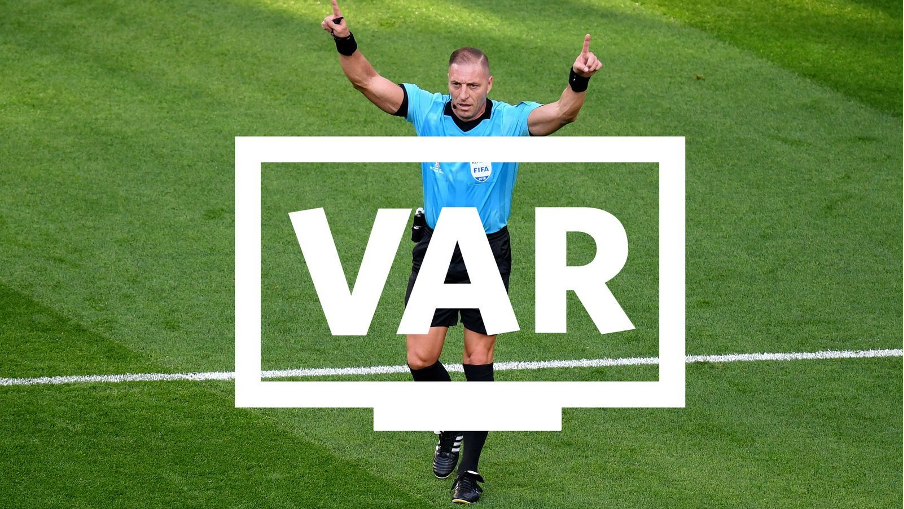
However, the introduction of VAR in 2018 split the fanbase. It was controversial because VAR is not only about fact, but instead involves a very human element of judgement with slowed down replays that, as legendary English striker, Gary Lineker, recently put it, “Often make everything look much worse than they actually are”.
That is why the 2026 World Cup has become such a dangerous moment for trust in officiating. Reuters reported on July 10 that FIFA’s expanded use of technology had become one of the tournament’s central controversies, with criticism focused on inconsistency, overuse and lack of transparency. The same Reuters report cited disputes involving Folarin Balogun’s red-card case, Egypt’s knockout defeat, Croatia’s disallowed goal and Luka Modric’s description of one decision as an abuse of technology. The inconsistencies in the snickometer – a device that has seen great success in Cricket – seen in the Norway-England game and the Portugal-Croatia game- have only stoked the tension further.
AP separately reported that FIFA lifted Balogun’s red-card suspension after US President Donald Trump called FIFA president Gianni Infantino to request a review, a decision that prompted criticism from Belgium and the whole world, while setting a very concerning precedent.
Those incidents explain the mood around VAR better than any abstract debate. The issue is not that supporters want mistakes; naturally, the vast majority want a fair game. The issue is that technology promised to reduce suspicion and has, in some cases, given suspicion sharper tools while proving to be inconsistently applied time and time again in a manner that feels as if it is being used selectively to support a narrative or certain teams.
When a goal-line system says the ball crossed the line, most people accept it. When VAR intervenes in one subjective incident and not another, supporters ask why. When a red-card sanction is handled differently from what fans expect, they ask who made the decision. When a sensor detects the faintest contact and erases a goal, they ask whether football has confused precision with justice. This does not immediately prove corruption or match-fixing but it is no secret that FIFA has historically been embroiled in corruption and is well regarded as a dishonourable and corrupt body. That is the reality, football does not need proven corruption for faith to weaken. It only needs enough inconsistency for supporters to believe the process is hidden from them.
Now football faces a harder question.
What rule, explanation or reform repairs the loss of trust caused by the technology that was supposed to restore it?
Syndicated from Our Today · originally published .
Legal context · powered by Jurifi
Get the legal angle on this story. Pick a prompt and Jurifi's AI will explain it using Jamaican law.
AI replies are based on Jamaican law via Jurifi. Not legal advice.
Other coverage
FIFA admits hydration breaks may not continue after World Cup criticism
Jamaica Inquirer
Showdown!
Jamaica Observer
More the merrier
Jamaica Observer
BATTLE ROYALE - Local sports icons share picks with eyes on Yamal and Messi as World Cup glory beckons
Jamaica Gleaner
¡Viva España! - La Roja reigns again, claiming second World Cup title after defeating Messi, Argentina
Jamaica Gleaner