Senator urges mandatory bodycam policy for JCF
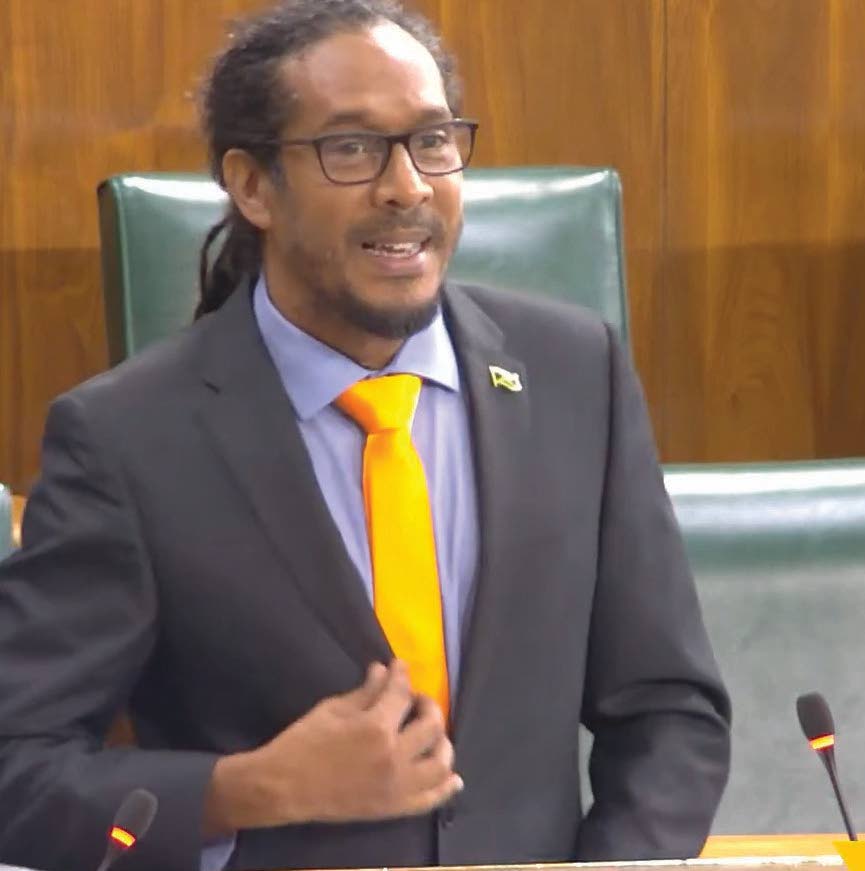
AN Opposition lawmaker has proposed the establishment of a digital accountability framework that would include a statutory body-worn camera policy for the Jamaica Constabulary Force (JCF).
The call was made in the Upper House on Friday by Senator Allan Bernard during the debate on amendments to the Cybercrimes Bill 2026.
Bernard advanced the suggestion against the background of the sharp rise in police fatal shootings this year which has triggered a cascade of calls from civil society groups for the police to wear body cameras on specialised operations.
He told the Senate that the Opposition, while supporting the Cybercrimes Bill, insists that national security must be constitutional security.
“Public safety must be rights-based safety, and digital accountability must apply not only to the governed but also to those who are doing the governing — the police, their searches, their seizures, their arrests and, too oftentimes in Jamaica, the extrajudicial killings,” he said.
He pointed to figures released by the Independent Commission of Investigations (Indecom), which show that 115 people have been killed by the security forces in reported confrontations since January 1. This, he said, far exceeds the 87 who were killed during the comparable period in 2025.
Bernard also pointed to recent statements by Minister of National Security and Peace Dr Horace Chang, dismissing as a “crazy idea” calls by civil society groups for the police to wear cameras on specialised operations that are likely to lead to confrontations with armed criminals.
Chang has insisted that to do so is dangerous and would make the police targets. But Bernard brushed those assertions aside.
“Today, as we strengthen the Cybercrimes Act, we say to the Government, in addition to coming to the Parliament and preaching digital trust, we also encourage that we do not ignore the impunity that is being handed down. We do not demand transparency for citizens while shielding the coercive power of the State from transparency. We do not criminalise the digital arm while ignoring the evidential darkness surrounding fatal police encounters,” Bernard said.
“This debate cannot be separated from a deeper national conversation that is taking place. The Government comes to the Parliament asking for more digital tools, stronger investigative powers, wider offences, tougher penalties, and clearer procedures on search and seize [operations under the Cybercrimes Act]. Yet, the same Government refuses to insist on one of the most basic digital accountability tools in modern policing — that is body-worn cameras,” Bernard argued.
“The Government wants cameras, courts, records, search seizures, digital keys and electronic evidence when it is pursuing the citizen, but when the citizen asks for cameras to protect life, liberty, and truth during police operations, we’re told that it’s a crazy idea,” he said.
At a post-Cabinet media briefing on April 22, Dr Chang dismissed as a crazy idea the calls for the police to wear body cameras when confronting armed criminals.
On Friday, Bernard pointed to a remark made by the minister with responsibility for science, technology and special projects Dr Andrew Wheatley, who piloted the Bill in the Lower House and who highlighted that clause 9 of the Bill requires the commissioner of police to develop a code of standard procedures for search and seizure under the Act because digital evidence must be handled with effectiveness and integrity.
“Yet, when the evidence concerns fatal police shootings the same principle of integrity is treated as optional,” he said, adding that “this contradiction borders on hypocrisy”.
“The Government cannot say Jamaica needs a trusted digital society while resisting the very technologies that would help citizens trust the State,” said Bernard. He also insisted that Chang’s statement that cameras would make the police targets “cannot be the end of the discussion”.
“The question is not whether every officer must wear a camera…,” Bernard said before he was interrupted by Senate President Tom Tavares-Finson who warned that the Opposition senator was not going to make the cybercrimes debate one about body cameras, regardless of how adroitly Bernard had steered his presentation in that direction.
Undeterred, Bernard said, “The Government says cybercrime is dangerous because harm now travels through digital platforms. If the law criminalises the nonconsensual publication of an intimate image because dignity matters, then surely the law can require recording State encounters where life may be taken, because life matters even more.
“If the law can impose up to 20 years for cybercrime offences against children, then surely, the State must answer when minors are among those killed in police operations.
“If the law can punish property owners who knowingly permit premises to be used for cybercrime, then surely public officials must be accountable when systems knowingly permit lethal operations without adequate transparency.”
Bernard told Tavares-Finson that “the central issue determines that accountability cannot be selective”.
After he called for the setting up of a digital accountability framework, including a statutory body-worn camera policy for the JCF, he was again interrupted by Tavares-Finson who said, “Although a warn you about it yuh still proceeding. Yuh talking about this piece of legislation and you calling the Senate to call for body-worn cameras? Come on nuh, Mr Bernard man.”
Opposition Senator Lambert Brown came to the defence of his colleague, stating that, “They [Government senators] can respond; you have all of them over there, 13 a dem.”
Tavares-Finson shot back, “Senator Brown, anytime I want your guidance I will ask you for it.”
He then pointed to the Standing Orders which, he noted, requires the person contributing to the debate to be relevant.
Tavares-Finson told Bernard that “yuh presentation is very good but yuh running off a di rail to a certain extent. Just stick to di topic a di Bill, man”.
Amendments to the Cybercrimes Act were approved in the House of Representatives on February 3.
The sharp rise in police fatal shootings this year has triggered a cascade of calls from civil society groups for the police to wear body cameras on specialised operations.
Syndicated from Jamaica Observer · originally published .
Legal context · powered by Jurifi
Get the legal angle on this story. Pick a prompt and Jurifi's AI will explain it using Jamaican law.
AI replies are based on Jamaican law via Jurifi. Not legal advice.