

Some Junior Market companies approaching loss of full tax holiday in 2027

Durrant Pate/ Contributor
A new squadron of Junior Market companies is rapidly approaching the loss of their full tax holiday, which comes to an end in early 2027.
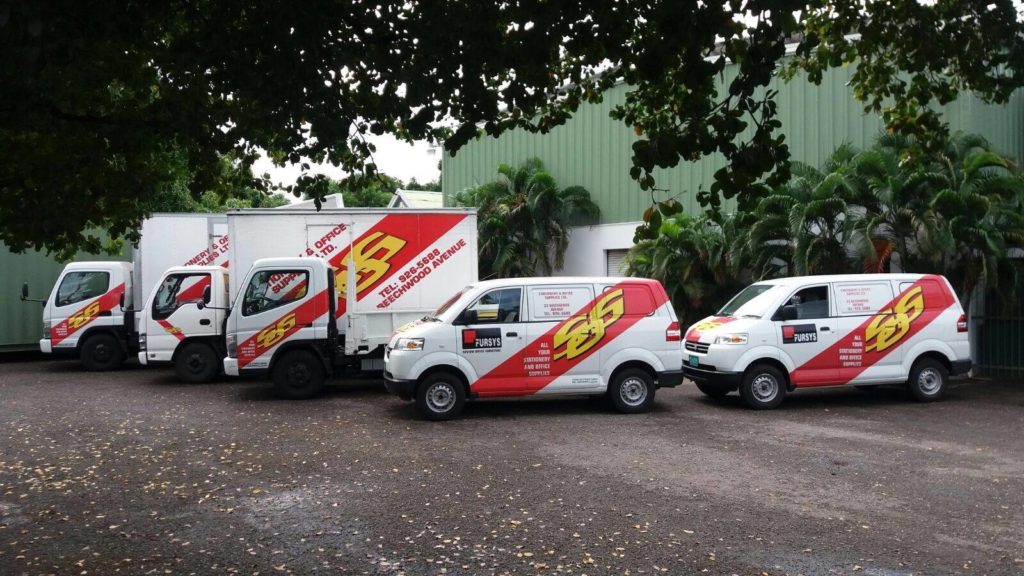
These companies include Stationery and Office Supplies, Fosrich, Main Event Entertainment Group Limited, and Express Catering, which were listed in 2017. Close behind them are Indies Pharma, Fontana and Mailpac, which were listed in 2019 and have now transitioned into their 50% phase, while Future Energy Source Company enjoyed the ride of its initial 100% holiday after its 2021 IPO until April of this year.
The junior market tax remission gives small and medium companies a 10-year tax break of 100% relief from corporate income tax for the first 5 years, and 50% relief for the next 5 years. Market analysis indicates that many of these companies named above have performed well, despite significant turbulence, including the COVID-19 pandemic, two hurricanes and the geopolitical tension from the US-Israeli war on Iran.
Expanding business tax benefits
Fosrich, for example, successfully deployed its early tax savings to drastically expand payload capacity and aggressively grow its solar and Polyvinyl Chloride product lines to generate over $324.71million (+62.9% YoY) in earnings in FY2022. However, the company reported a loss in FY2025, as shipping delays, which led to a slowdown in supplies, coupled with the decline in global solar panel costs, which stalled revenue growth.
An assessment done by NCB Capital Market shows that similarly, FESCO has been aggressively expanding its physical fuel station network to drive growth. However, its junior market tax remission expired in April 2026, and this is expected to moderate the pace of earnings growth as a larger portion of pre-tax profits is absorbed by taxation.
Nonetheless, the company’s outlook is anchored by the expected growth potential from its aggressive network expansion strategy, including a newly company-owned and operated station, FESCO Oval, and its diversification into the Liquefied Petroleum Gas segment. Conversely, SOS has been navigating a challenging operating environment, worsened by the impact of Hurricane Melissa.
The company will therefore need to strengthen its competitive position to drive robust topline growth and achieve substantial cost/efficiencies from its investors to offset the impact of the higher tax rate once it takes effect in the next two years. Similarly, Fontana’s 5-year tax break ended in January 2024, and it will begin paying full taxes in January 2029.

The higher expected tax expenses imply that cost control and efficiency will be even more important to sustaining profitability, especially as operating expenses grew by 54.5% during the period when it opened its Portmore store and acquired Monarch Pharmacy. Ultimately, the junior market tax incentive has provided a critical financial propellant necessary to support the transformation of ambitious small enterprises into resilient market heavyweights.
However, to maintain altitude once the final tax boosters detach, companies must continuously find new sources of revenue growth, optimise supply chains, leverage economies of scale, and relentlessly defend their operating margins. To accurately gauge true operational strength, investors must look past the tax shield and closely monitor the underlying telemetry: pre-tax earnings growth, operating margin stability, and cash flow generation.
NCB Cap Market assesses, “where the tax holiday has masked underlying cost or operational pressures, shareholder returns and dividend paying capacity could plummet once the final booster falls away. Conversely, those who have used their tax-free journey to build structurally sound, scalable business models will seamlessly enter a stable, long-term orbit, proving they are fully equipped to navigate the gravitational realities of the wider markets and deliver sustainable, long-term value in a fully taxed universe.”
Syndicated from Our Today · originally published .
Legal context · powered by Jurifi
Get the legal angle on this story. Pick a prompt and Jurifi's AI will explain it using Jamaican law.
AI replies are based on Jamaican law via Jurifi. Not legal advice.