
Welcomed with open arms
FOR a decade, Jamaican Kriston Bell says she lived in Argentina without ever experiencing racism or discrimination, despite the country’s controversial history and international scrutiny over issues of anti-black racism.
Passionately defending Argentinians, Bell described them as some of the most welcoming people she has ever met, and argued that the nation should no longer be judged solely by its past. Her comments come amid recurring online debates about racism in Argentina, discussions that often resurface during the FIFA World Cup. On social media, critics frequently point to Argentina’s men’s national football team as one of the few elite international sides with no black players, using it as a springboard to highlight the country’s history of anti-black racism and the erasure of its Afro-Argentine population.
Argentina’s controversial anti-black history is rooted in a 19th-century nation-building project that sought to establish the country as a predominantly European society. Historians say this was achieved through policies that encouraged large-scale European immigration, the marginalisation of Afro-Argentines and Indigenous peoples, and the gradual erasure of their contributions from the country’s official history.
During the colonial period and the early years of independence, Buenos Aires was a major centre of the transatlantic slave trade, and people of African descent made up a significant share of the population. However, as Argentina pursued a European identity under leaders such as President Domingo Faustino Sarmiento, Afro-Argentines became increasingly absent from official records and national narratives, while wars, disease outbreaks, and changing demographics further contributed to the decline of the black population.
However, when she travelled to the South American country in 2014 to pursue a degree in dentistry, eventually living in the foreign nation, Bell said her experience was far from what the history books depicted, arguing that the country has changed and made several attempts at reform.
Kriston Bell poses for a photo in front of the Floralis Genérica monument in the Plaza de las Naciones Unidas in the Recoleta neighbourhood of Buenos Aires, Argentina.
She shared that she lived in Rosario, the birthplace of footballs legend Lionel Messi, for nine years and spent her last six months in Buenos Aires, eventually planning to gain her citizenship because of the love she has for the people.
“They were very curious. They wanted to know where I was from, what I was doing there, how I was experiencing the country, and they were actually very, very welcoming. I got so many invitations to go and have lunch with them, to come to their house, to visit their family, and stuff. They were just always wanting to invite me somewhere to do something, or let’s get together, or say let’s go to the park or let’s do this and let’s do that,” she told the Jamaica Observer.
“They’re very much into family. They value social bonds, they value friendship a lot, and they don’t necessarily need a lot of money to have a good time. They’ll invite you or say, ‘Oh, let’s go have a coffee’ or ‘Let’s go get ice cream’, ‘Let’s go to the park’ and for them, these simple things are like the best plan ever. I would just sit and talk with the people that you really love and care about,“ she said, joking that on many occasions she forgot she was black because she was never treated differently.
An international student for her first three years in the country, she said teachers were very accommodating and helped her to learn the native tongue. She added that there is also a growing international community in the country with black people from across the globe, many of whom told her in conversation that they had similar positive experiences and were heavily supported by locals when they opened businesses or worked in the country.
According to Bell, the constant talk about Argentina’s past is an act of “slander or an attack on Argentina’s reputation”.
“While I never agree with any race or any one person hurting another person, we have to look at things within cultural context, right? No, I don’t agree with what happened, and I feel like the attack is also biased, because they tend to have all this energy for Argentina while there are so many other nations that actually tried to widen their white population. Some were not so successful, but black people suffered under the governance or the previous governance of those countries,” she reasoned.
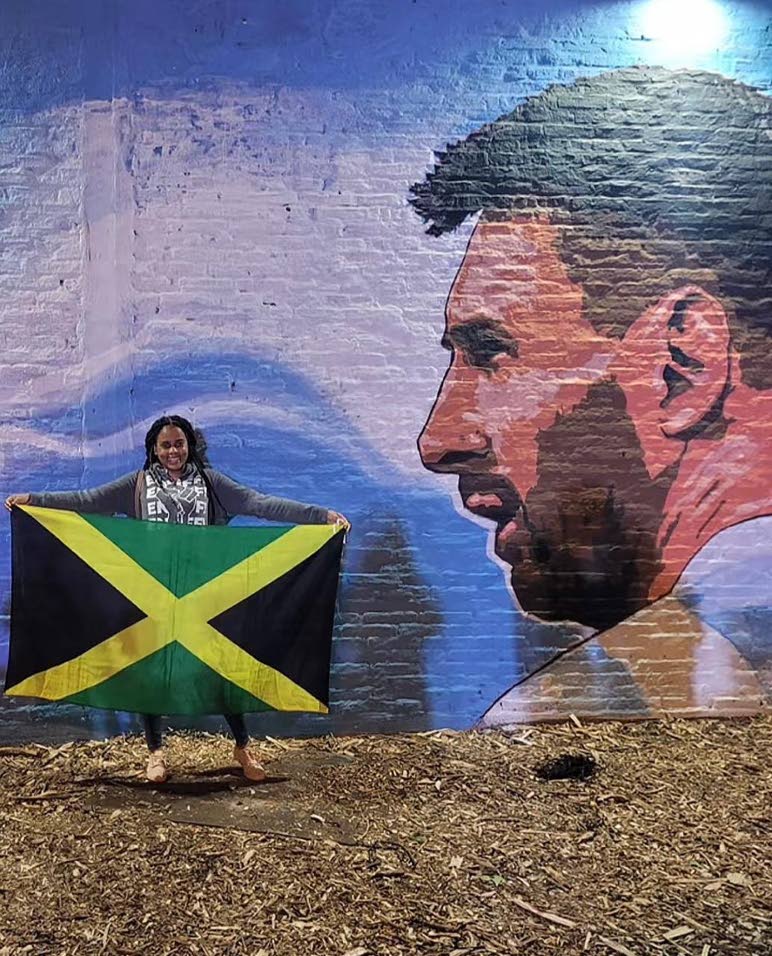
Jamaican Kriston Bell says she lived in Argentina for 10 years and never experienced racism.
“We’re not even as mad at the enslavers or the colonisers. We’re not as mad, but we come now, and we tend to want to have this hate towards Argentina, a country that loves and receives people so well. I always say, the people who committed those acts, they are no longer alive, right? And as much as a nation needs to recognise its past, we also have to move towards the future. We have to do whatever we can do right now to improve the present and to improve the future. I think Argentina is doing a very good job at that,” said Bell, adding that no matter where she went in the country, she was never denied service or entry.
She further noted that Afro-Argentines, though small in number, continue to exist in the country and have freedom of expression. She said Afro-Argentines have an association and a museum that openly shares their history. She further pointed to a statue erected in the country in honour of María Remedios del Valle, a black pardo soldier who participated in the Argentine War of Independence on the side of the United Provinces of the Río de la Plata. She added that María Remedios del Valle is also pictured on the Argentine 10,000 note in recognition of her act of service.
“Argentines don’t care about the colour of your skin; they care about how you are as a person. If you’re someone who is respectful, you love their country, and you want to contribute to the development of their country, you’re more than welcome. If you’re going to go and get involved in criminal activities, destroy or try to bring down the country, then they’re not going to like you,” she insisted.
She urged individuals to visit the country and experience it for themselves, instead of letting the country’s past cloud its present reality.
“It’s not at all what is being painted, and I’m dedicated to vindicating Argentines, if that’s possible,” said a determined Bell.
Syndicated from Jamaica Observer · originally published .
Legal context · powered by Jurifi
Get the legal angle on this story. Pick a prompt and Jurifi's AI will explain it using Jamaican law.
AI replies are based on Jamaican law via Jurifi. Not legal advice.
Other coverage

New Miss Kingston and St Andrew Festival Queen crowned - Danielle Cox walks away with the title
Jamaica Gleaner
Physically challenged mother of three seeking a job
Jamaica Star (Video)Watch
I never thought that I would love again
Jamaica Star
Teen starts own hair salon
Jamaica Star
Resilient burn-victim Adrianna Laing proudly graduates high school
Jamaica Gleaner (Video)Watch