
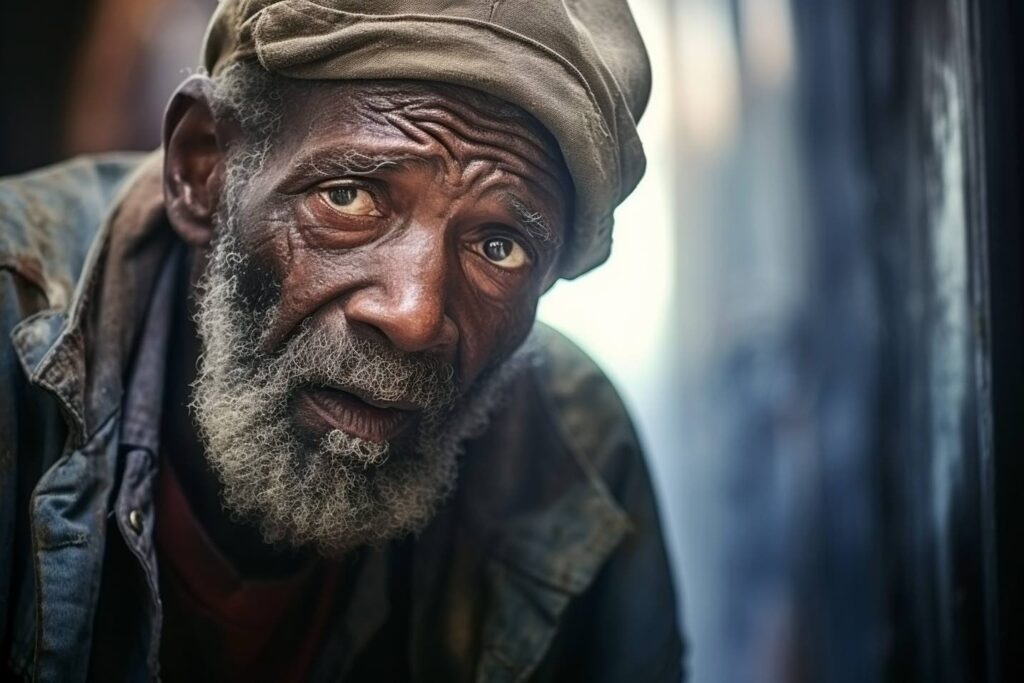
A troubling surge in the number of people being taken to Kingston Public Hospital (KPH) and University Hospital of the West Indies (UHWI) and abandoned was highlighted during a discussion on homelessness in the capital city with a senior social worker cautioning that unless urgent action is taken to stem the problem it could spiral into a full-blown crisis.
“I’m in the hospital, but homelessness does not only affect me in the hospital, or affect the hospital; it’s a social issue. It’s a social dilemma that needs to be addressed on a social level, on a more global level. It is heading to crisis proportion pretty fast if it is not fixed,” Dianne Duke, who is stationed at KPH and Victoria Jubilee Hospital, told the seminar hosted by the Kingston and St Andrew Municipal Corporation (KSAMC) last Friday.
“Currently we have 23 social cases [at KPH]. Some would have been brought in by relatives, neighbours, well-wishers. And a recent trend that I have been noticing is that there are some private nursing home facilities that are taking persons to the hospital and leaving them there because the relatives of these persons can no longer pay to have them stay in these private facilities,” she added.
She explained that some of the abandoned or homeless people were homeless prior to becoming hospitalised.
“You’d be surprised to know the number of persons actually living in the market and some of them living on the street. The ones who live in the market, those are the ones who would generally hustle, would help the vendors to carry their loads and whatever else it is that they do in the marketplace. But once they become ill and can no longer manage, they end up in the hospital. And, as social workers, we don’t discharge persons back to the street. If you can’t self-care, if you can’t ambulate, we can’t put you out,” she told the more than 35 participants who discussed the issue of mental health and homelessness in Kingston and St Andrew. The seminar also examined the growing challenges facing vulnerable residents and explored collaborative solutions.
Duke added that, in an effort to curtail the issue, KPH has been collaborating with various entities to lessen the number of abandoned individuals staying at the facility.
“We have had meetings with various NGOs and faith-based organisations that offer residential care — long-term residential care. We have met with them to help us. We have also met with the CEO for the KSAMC along with the inspector of poor, and this is how we have been able to control the numbers, because it would have been higher,” she said.
Sherene Williams-Hemmings, head of the Department for Medical Social Work at UHWI, told the seminar that her hospital currently has 20 cases of abandoned patients between 40 and 96 years old.
“We have been seeing an increase in the number of abandoned cases within the UHWI. I would say from around COVID. We have 90 per cent senior citizens and we currently have a teenager who, unfortunately, his relatives have been unwilling to return to hospital for him due to the nature his medical condition,” Williams-Hemmings said.
“Unfortunately, we’ve had to manage those situations, tending to all aspects of care, social care, financial assistance, you name it. As you can imagine, we’re unable to put the patients out on the roads, because they do not have any relatives to accept them from hospital care. Or the conditions under which they were living prior to hospitalisation may not be suitable,” she added.
Williams-Hemmings noted that despite work being done with the Poor Relief Department to place the abandoned individuals, movement has been slow due to high a demand for accommodation.
“Over the period, we have been able to have two persons placed thus far, but [the Poor Relief Department staff] are also servicing other hospitals as well as persons who are living on the streets. We have gotten assistance, too, from Missionaries of the Poor, but that, too, is slow because you have a lot of persons [in need]. Everywhere is full and, unfortunately, placement at these facilities are only on the basis of someone’s demise — that’s when a space becomes available. So it is a very complicated and complex situation [this] issue of homelessness that we are currently experiencing,” she said.
DUKE… a recent trend that I have been noticing is that there are some private nursing home facilities that are taking persons to the hospital and leaving them there
WILLIAMS-HEMMINGS… we have 90 per cent senior citizens and we currently have a teenager who, unfortunately, his relatives have been unwilling to return to hospital for him due to the nature his medical condition
Syndicated from Jamaica Observer · originally published .
Legal context · powered by Jurifi
Get the legal angle on this story. Pick a prompt and Jurifi's AI will explain it using Jamaican law.
AI replies are based on Jamaican law via Jurifi. Not legal advice.
Other coverage

Two cut down by police in Lluidas Vale | Women caught on CCTV stealing charged| Suspect dies/JBNN
JBN Network (Video)Watch
‘Spoiled insulin’: Sudan war disrupts drug supplies, fuelling smuggling
Jamaica Inquirer
Questions mount over J$770 million left unused in Jamaican gov’t aid program
Cnweekly
Entries For 2026 JCDC Creative Writing Competition Open June 1
Jamaica Information Service
10 years of QORIHC awards - ‘bittersweet’ 2026 queens honoured at gala ceremony on Sunday
Jamaica Gleaner